
Plan: Intimate ceremonies
Planning an Intimate Wedding Ceremony
With a small number of guests, the risk is a ceremony that looks like a large one with most of the seats missing. How to scale the space, the seating and the focal point so a few people fill the moment.
An intimate or micro wedding ceremony has a particular problem. The conventions of a ceremony, from rows of chairs and a long aisle to a raised focal point at the front, were designed for an audience. Applied to ten or twenty people, they leave gaps. Empty chairs, a long walk past few faces and a large space around a small group all make the ceremony look reduced.
Filling the space with decoration does not solve this. Making the space smaller and the group closer does.
Start with the size of the space
Choose, or create, a space that is just large enough. In a garden, that might be the corner beneath one tree instead of the open lawn. In a large room, it might be one end of it, with the rest left in shadow or screened. A courtyard, a terrace, a library or a small chapel suits an intimate ceremony better than a ballroom.
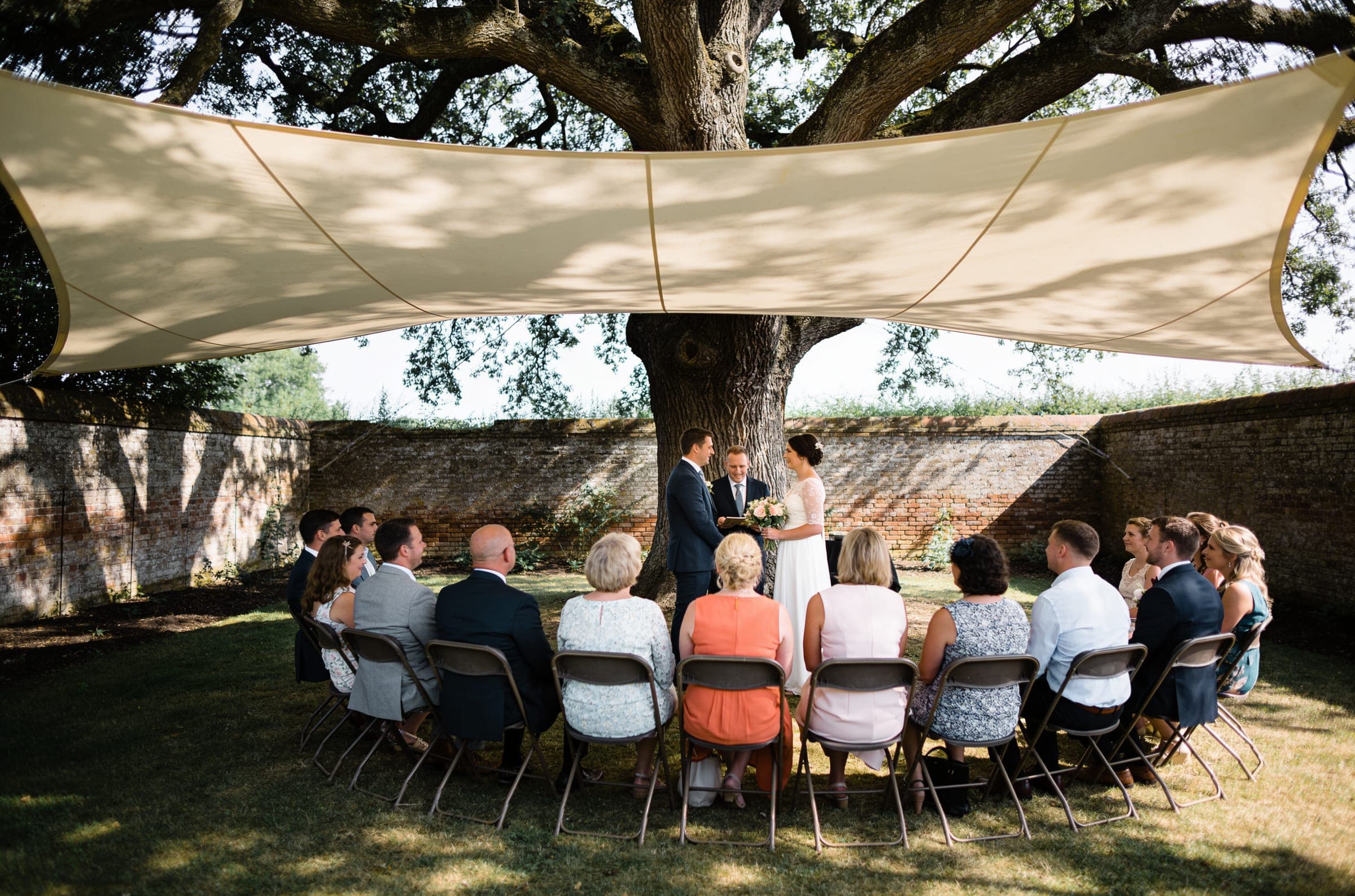
A small group in a space that fits it reads as intimate. The same group in a large space reads as few.
Seating that gathers
Rows facing forward put guests behind one another and behind the couple. For a small group, that distance works against the point of the ceremony. Several arrangements bring people closer:
- A semicircle. One or two curved rows around the couple. Everyone can see faces, not just backs.
- Facing sides. Guests on two sides of a central space, facing each other and the couple. Suits long, narrow rooms and courtyards.
- Standing. For a short ceremony, guests standing close around the couple. Provide seats for anyone who needs them.
- At the table. Some couples hold the ceremony at the dinner table itself, with everyone already seated.
Whatever the arrangement, remove extra chairs. A few empty seats say more about who is missing than who is present.
A focal point at human scale
Large arches, tall arrangements and platforms were designed to be seen from the back of a large crowd. For a small group standing a few meters away, they tower. Choose something at the scale of the group: a doorway, a window, a tree trunk, a low wall, a table with candles. Or let the view do it.
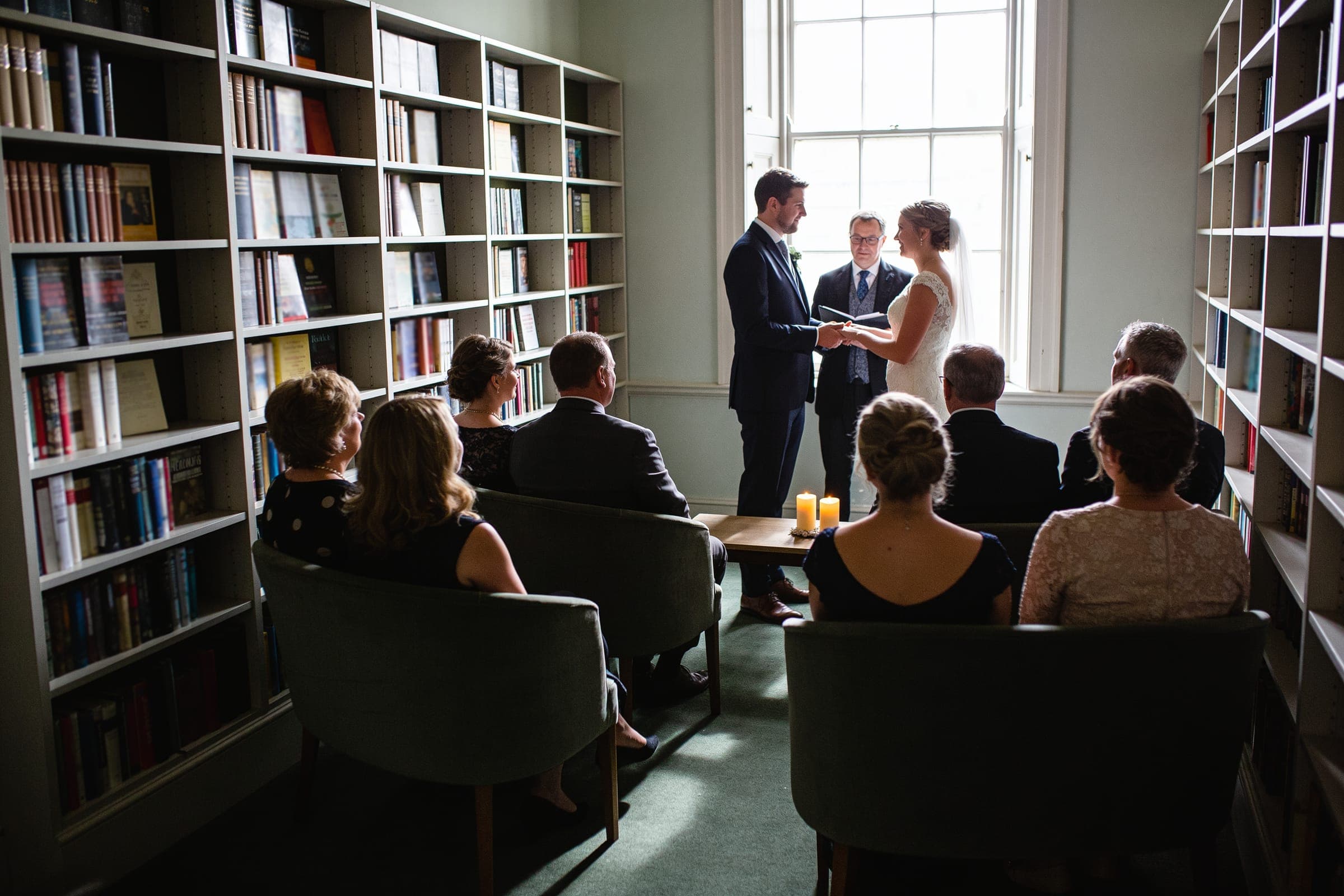
Wedding ceremony ideas built around the setting compares natural focal points across different places, from gardens to glasshouses.
Pace and entrance
A processional needs distance to work. Without it, a formal entrance can feel staged. A shorter walk, arriving together, or simply beginning once everyone has gathered are all reasonable choices. The ceremony can be slower in other places: readings by guests, time for the couple to speak, a moment of quiet. In a small group, these carry further than any entrance.
When it works, and when it strains
Works especially well when
- The space can be sized to the group.
- Guests know one another, or will by the end of the day.
- Dinner follows closely, so the ceremony flows into a shared meal.
Needs more thought when
- The only available room is much too large.
- Religious or civil requirements set the ceremony's form.
- Some guests have mobility needs that rule out standing or uneven ground.
What follows
An intimate ceremony often sits inside a small wedding, with dinner at one table. The guide to a small wedding looks at the day as a whole, and backyard wedding planning covers holding it at home.