
Plan: Backyard weddings
Backyard Wedding Planning: Making Home Work as a Venue
A backyard wedding trades a venue's infrastructure for a place that already means something. This guide works through scale, the ceremony, dinner, logistics and weather, so the plan is realistic before it is pretty.
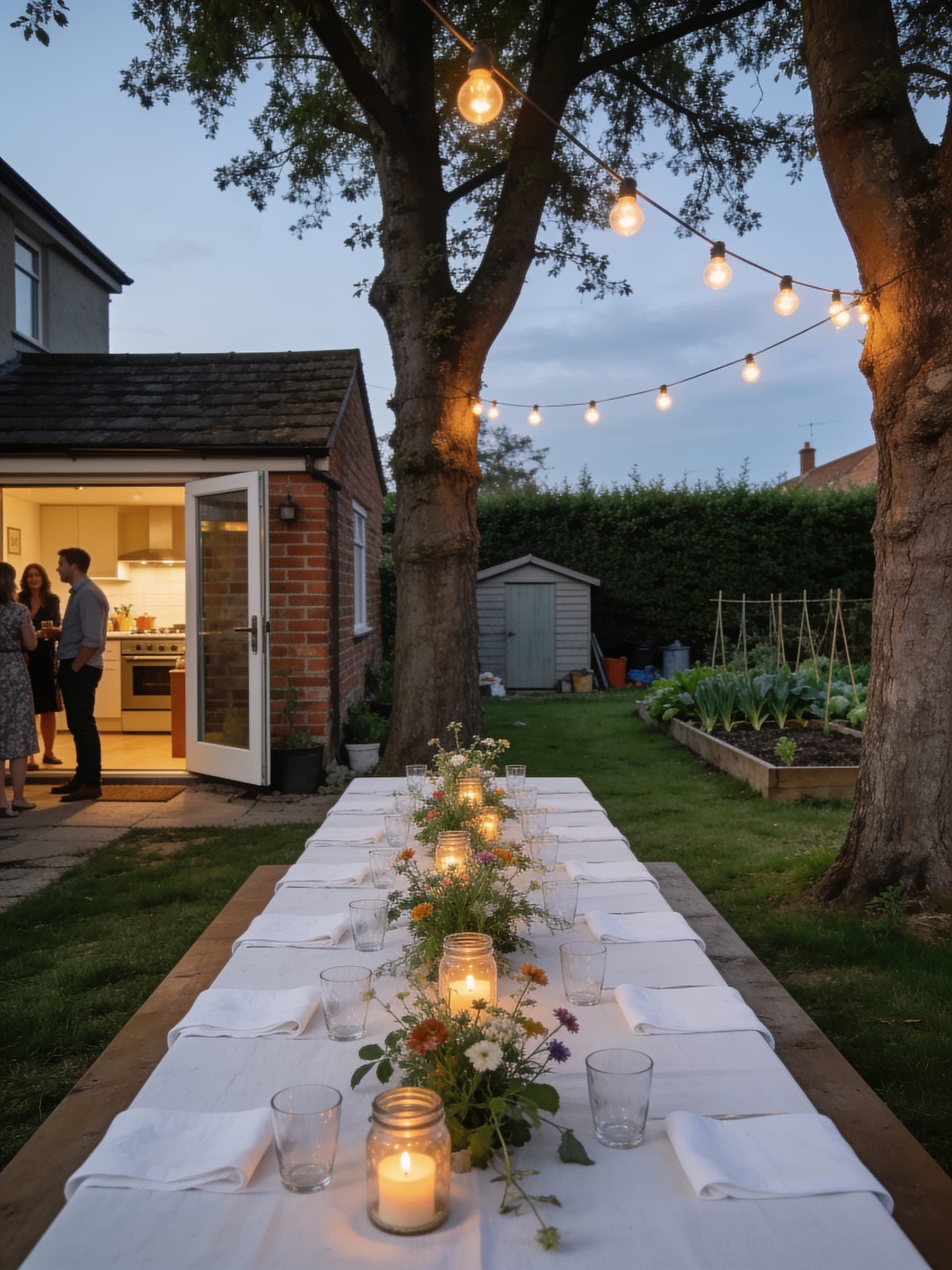
The appeal of marrying at home, or at the home of a parent or friend, is obvious. The place is known, it is personal, and the day can move at its own pace. The difficulty is that a garden is not built to host a wedding. Everything a venue provides without being asked (toilets, a kitchen, parking, cover, power, furniture, a person responsible for the building) has to be thought about, and much of it has to be brought in.
None of that makes a backyard wedding unwise. It means the plan has to start with how the day will run, and only then turn to how it will look.
Measure before you imagine
Gardens always look larger empty than they are once tables, chairs, a serving area and people are in them. Measure the usable flat ground, and sketch where the ceremony, drinks and dinner would go. Leave space for guests to move between tables, and for caterers to get to them.
The number of guests your garden can host comfortably is often lower than you expect. That is a good reason to consider a smaller wedding designed at that scale. Squeezing a larger list into the space costs more than it gives.
Decide the guest list from the garden, not the garden from the guest list.
Decide the order of the day
At most venues, different parts of the day happen in different rooms. At home, they often happen in the same space. Decide early which of these is true for you:
- One space, turned around. The ceremony happens where dinner will be served. Guests move elsewhere for drinks while chairs become tables. This needs people and time.
- Two spaces. The ceremony at the far end of the garden, dinner near the house. Simpler on the day, but it needs more room.
- Ceremony elsewhere. A registry office, a place of worship or another site, followed by the reception at home. This keeps the garden for dinner only.
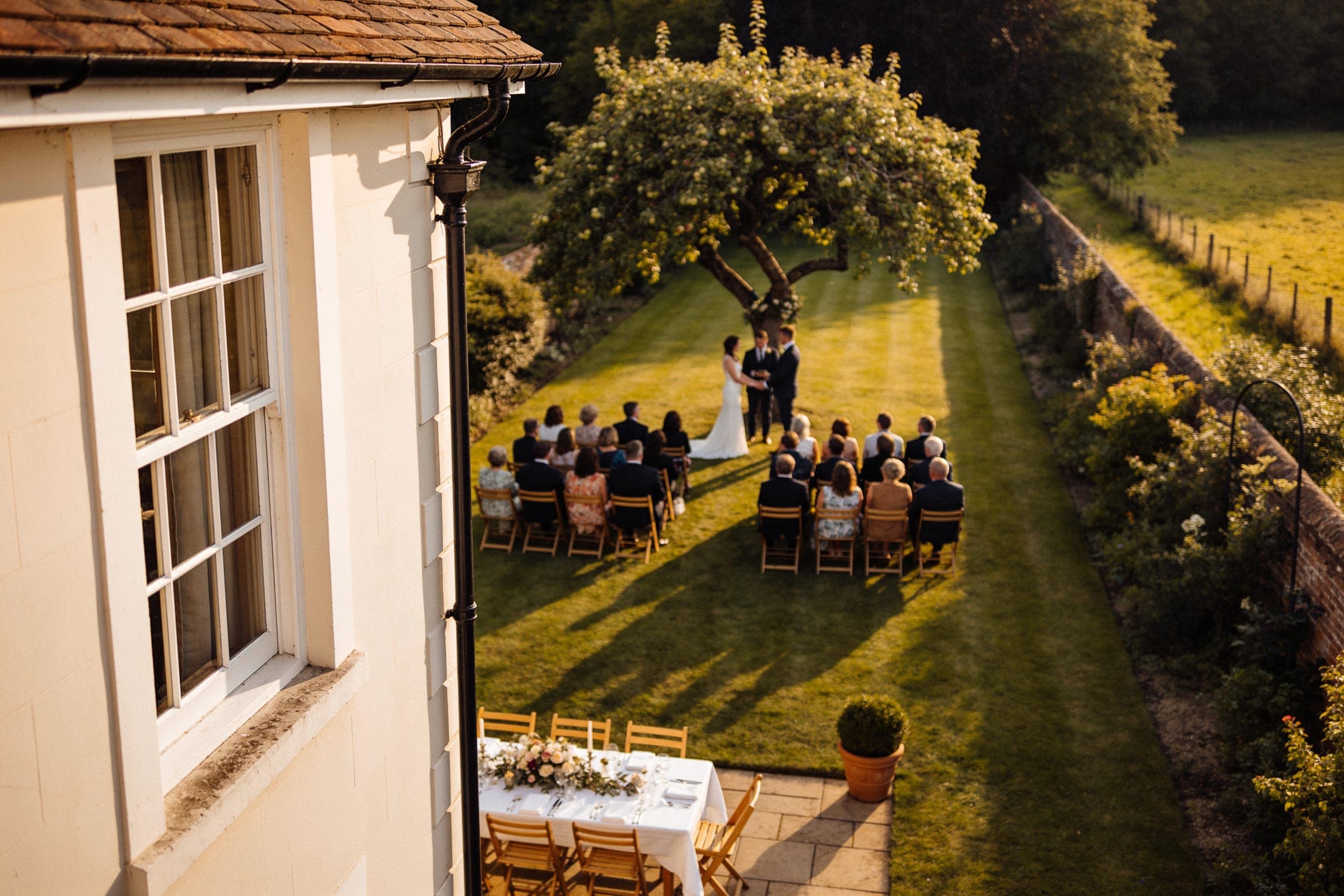
The ceremony itself can be very simple at home. For how to arrange a small group so it feels intentional rather than sparse, see planning an intimate wedding ceremony.
Dinner in a garden
A single long table, or two, suits most gardens better than scattered rounds: it gives the space a clear shape and makes a small group feel gathered. Place it where the ground is flat and firm, near enough to the house for service, and where it will look good after dark. The case for a long-table wedding dinner explains when this works.
Think about catering first. A caterer will need somewhere to prepare and plate food, power, water and a route to the table that does not cross the dance floor. Their requirements often decide where dinner can go.
The logistics a venue would handle
This is the part most often underestimated. Go through it early, with the people who will supply each piece.
- Toilets. A household bathroom is rarely enough for a whole guest list over several hours.
- Power. Catering, lighting and music may need more than domestic sockets supply safely.
- Parking and access. Where guests and suppliers leave cars, and whether neighbors are affected.
- Neighbours and noise. Tell them in advance. Local rules on noise may apply.
- Clearing up. Who takes everything down, and when, including rubbish and hired items.
Plan for rain as the first plan
Without a building large enough to hold everyone, a covered structure is usually the only realistic wet-weather plan. Treat it as the likely scenario. Decide how it will be laid out, how it will be lit and whether it can stay open at the sides on a fine evening. A marquee that looks good closed is a better choice than one you hope never to use.
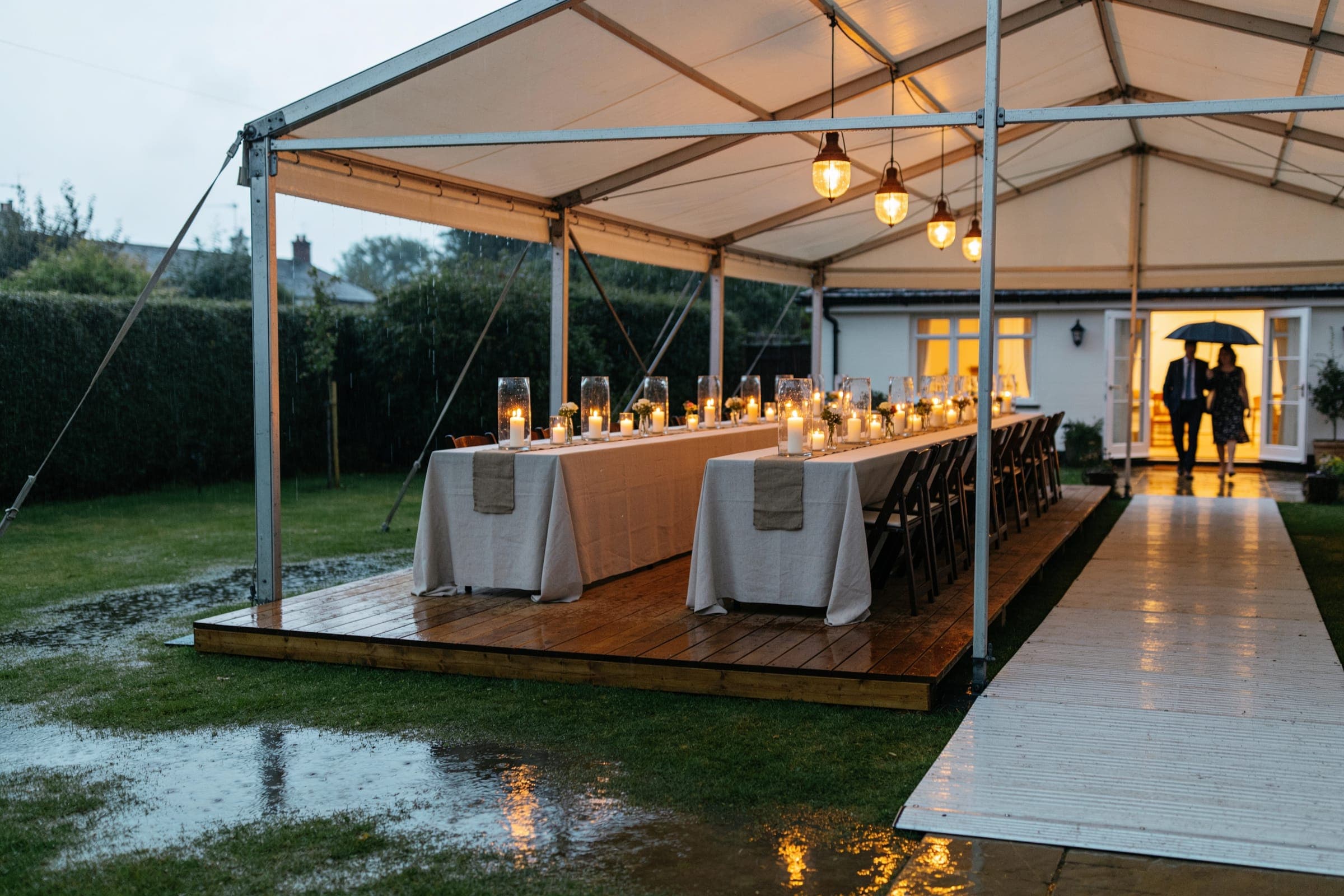
Rain also affects the ground. Consider where guests will walk, and whether flooring or matting is needed on grass.
Letting the garden be itself
Once the logistics are settled, the styling can be light. A garden that is personal to you already has its character: particular trees, a favorite corner, the planting someone chose over years. Time the wedding to when the garden is at its best if you can, and let flowers that belong in the setting do the rest. The advice in the garden and courtyard wedding edit applies to a private garden too.