
Plan: Small weddings
The Place & Promise Guide to a Small Wedding
A small wedding works best when it is designed for its size from the start, not scaled down from a larger plan. How to choose the place, shape the ceremony and dinner, and spend attention where a small group will notice it.
The usual way to plan a smaller wedding is to take the conventions of a large one and reduce them: fewer tables, a shorter aisle, a smaller dance floor. The result can feel like something is missing. The room is too big, the aisle too long, the moments designed for a crowd happen in front of a handful of people.
A better approach is to ask what a small group makes possible. Everyone can sit at one table. The couple can speak to every guest. A place too small for a large wedding becomes available. The plan below follows from those possibilities.
Choose a place built for the number
The single most important decision is a venue scaled to the group. A room designed for 150 feels empty with 30 people in it, however it is dressed. A room designed for 30 feels full and warm.
This opens up settings that larger weddings cannot use: a restaurant's private room, a villa's dining room, a courtyard, a library, a glasshouse, a family garden. Many of these have strong character and need very little added. The questions in what actually matters when choosing a wedding venue still apply, with scale first among them.
A small wedding in a room that fits it will always feel more generous than the same wedding in a room that does not.
Rethink the ceremony
With few guests, rows of chairs facing forward can make the empty spaces obvious. Arranging guests in a loose semicircle, standing close, or seated in two short rows on either side of the couple changes the feeling from audience to witnesses. The distance between the couple and their guests becomes a few steps.
A long processional also loses its purpose when there are only a few people to walk past. A short entrance, or none at all, often feels more natural. Planning an intimate wedding ceremony covers seating, focal point and scale in detail.
Make dinner the center
For many small weddings, dinner is the main event. One table for everyone changes how the evening feels: conversations cross, toasts feel like part of the meal, and nobody is placed at the table furthest from the couple. The case for a long-table wedding dinner explains when that works and how to arrange it.
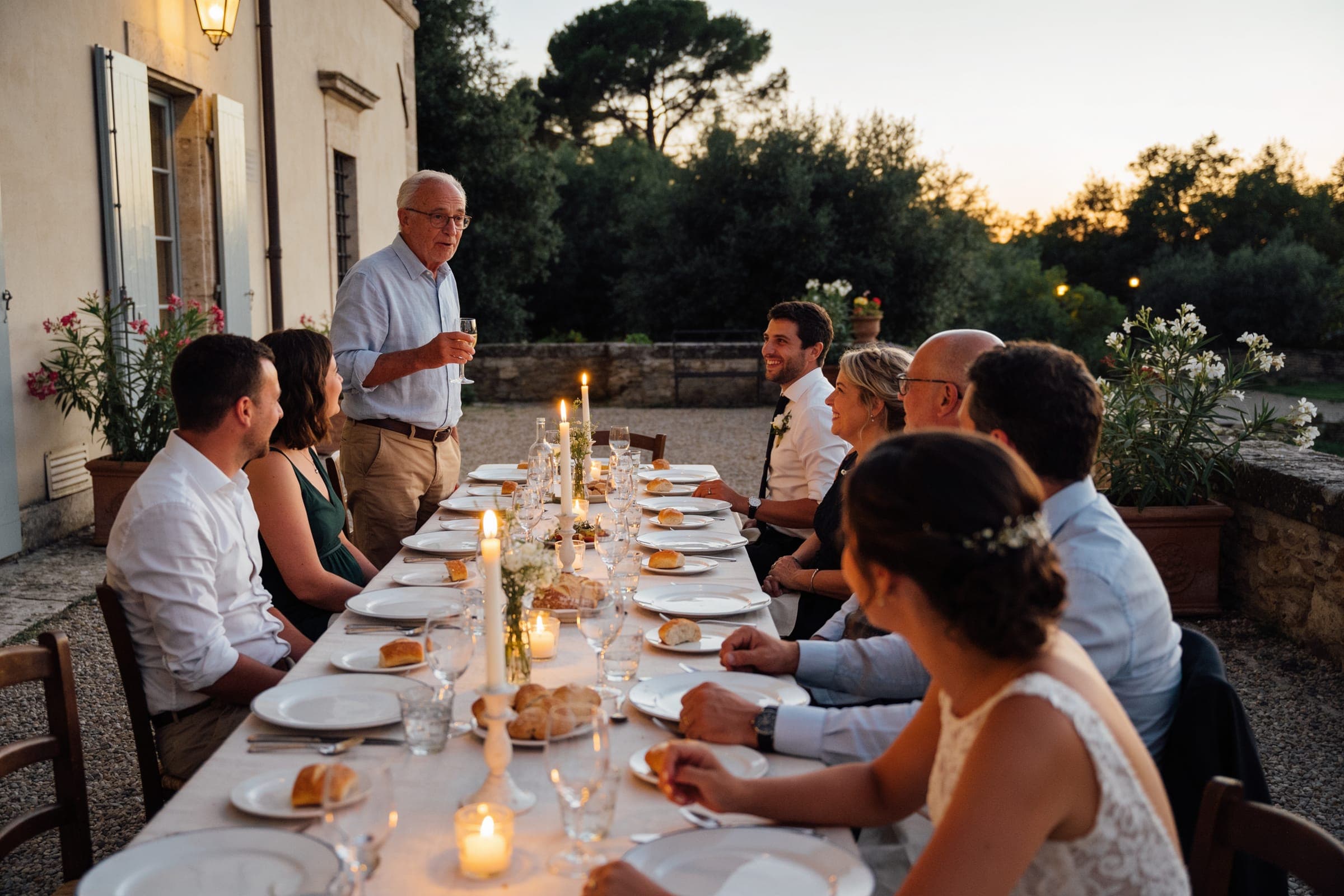
Speeches can be shorter and more personal, because everyone knows everyone. Courses can be served at a slower pace. Time normally spent on a dance floor can go into a longer dinner, if that suits you.
Where to spend attention
In a large wedding, guests see details at a distance. In a small one, they see them at arm's length for several hours. That shifts where care is most visible.
- The table. Linen, glassware, plates and candles are handled and looked at closely. How to make the table feel considered.
- Food and wine. A smaller number makes a better menu possible, and it matters more at a long dinner.
- Stationery. A handwritten place card or a personal menu is noticed when there are few of them. See the details that make a wedding feel cohesive.
- Time. A small wedding can move slowly. Leave space in the day. Not every hour needs a plan.
You are the hosts
At a large wedding, the couple moves through the day while others run it. At a small one, guests look to the couple more directly: who greets them, where they should stand, when dinner starts. That can be a pleasure, but it takes attention away from the day itself if nobody else holds the practical thread.
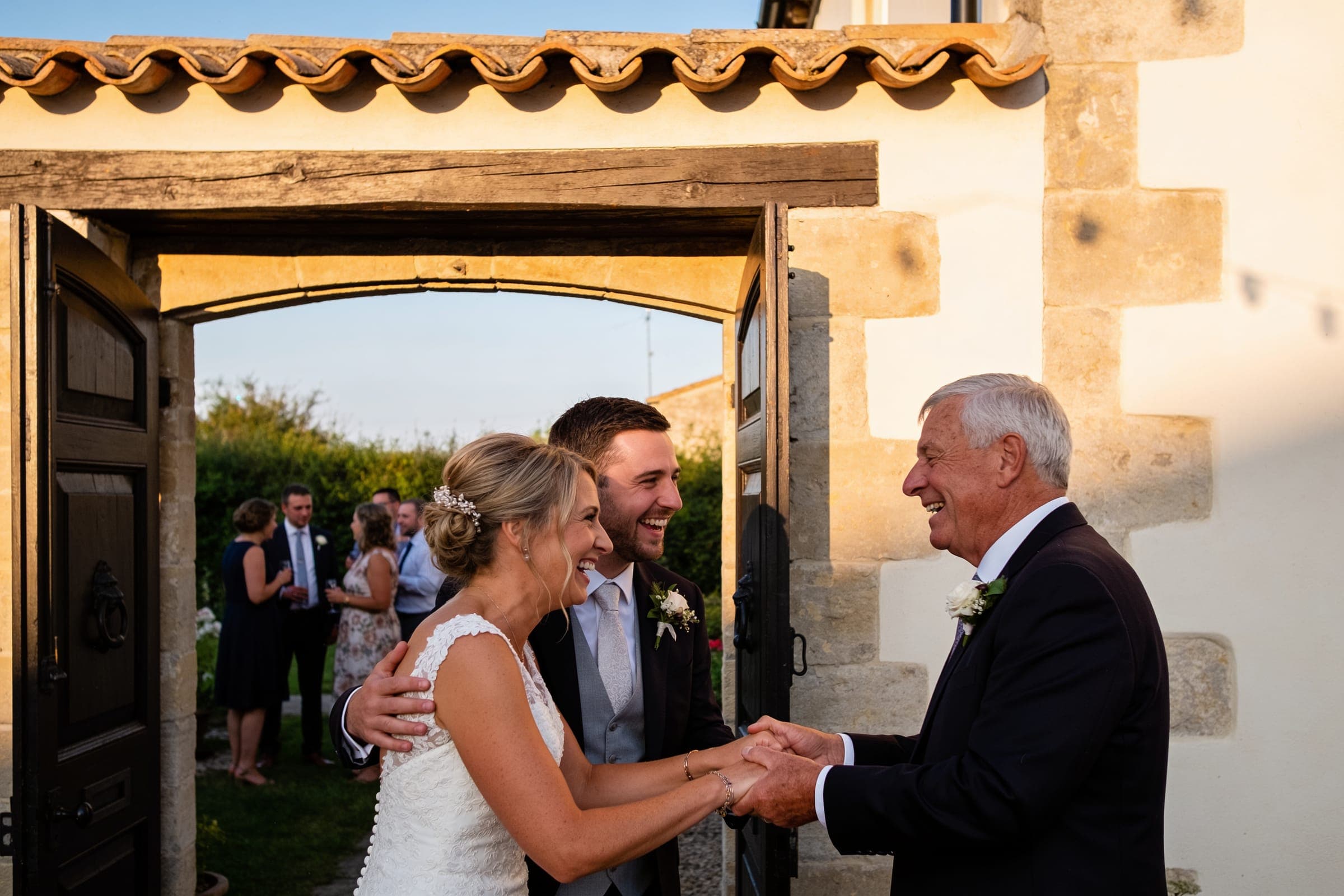
Ask one person, a friend, a family member or the venue's coordinator, to be responsible for timings and suppliers. Then the couple can spend the day with their guests, which is usually the reason for choosing a small wedding in the first place.
What can be left out
Some conventions exist to manage large numbers: seating charts across many tables, table numbers, a formal receiving line, a large dance floor, a band. With a small group, many of them are unnecessary. Leave out what does not serve the size of the wedding, and the rest has more room.
If you are marrying at home, backyard wedding planning covers the logistics a small group still needs.