
The Edit: Long-table dinners
The Case for a Long-Table Wedding Dinner
One long table changes a wedding reception from a room of separate tables into a single shared dinner. When it works especially well, what it asks of the room and the service, and when a more collected arrangement is the better choice.
Seat everyone along one table, or two or three parallel ones, and the character of the evening changes. Guests look along the table rather than across a room. Conversations overlap. Toasts become part of the meal instead of interruptions to it. The table itself becomes the main piece of decoration, a single line of linen, glass and candlelight running through the space.
That is the case for it. It is a strong case in the right conditions, and a poor one in the wrong ones.
Where it works best
Long tables suit long spaces. A barn, a gallery, a glasshouse, a terrace, a courtyard, a row between vines: in each of these, a long table follows the shape of the place. In a square ballroom, the same table can look lost in the middle of the floor.
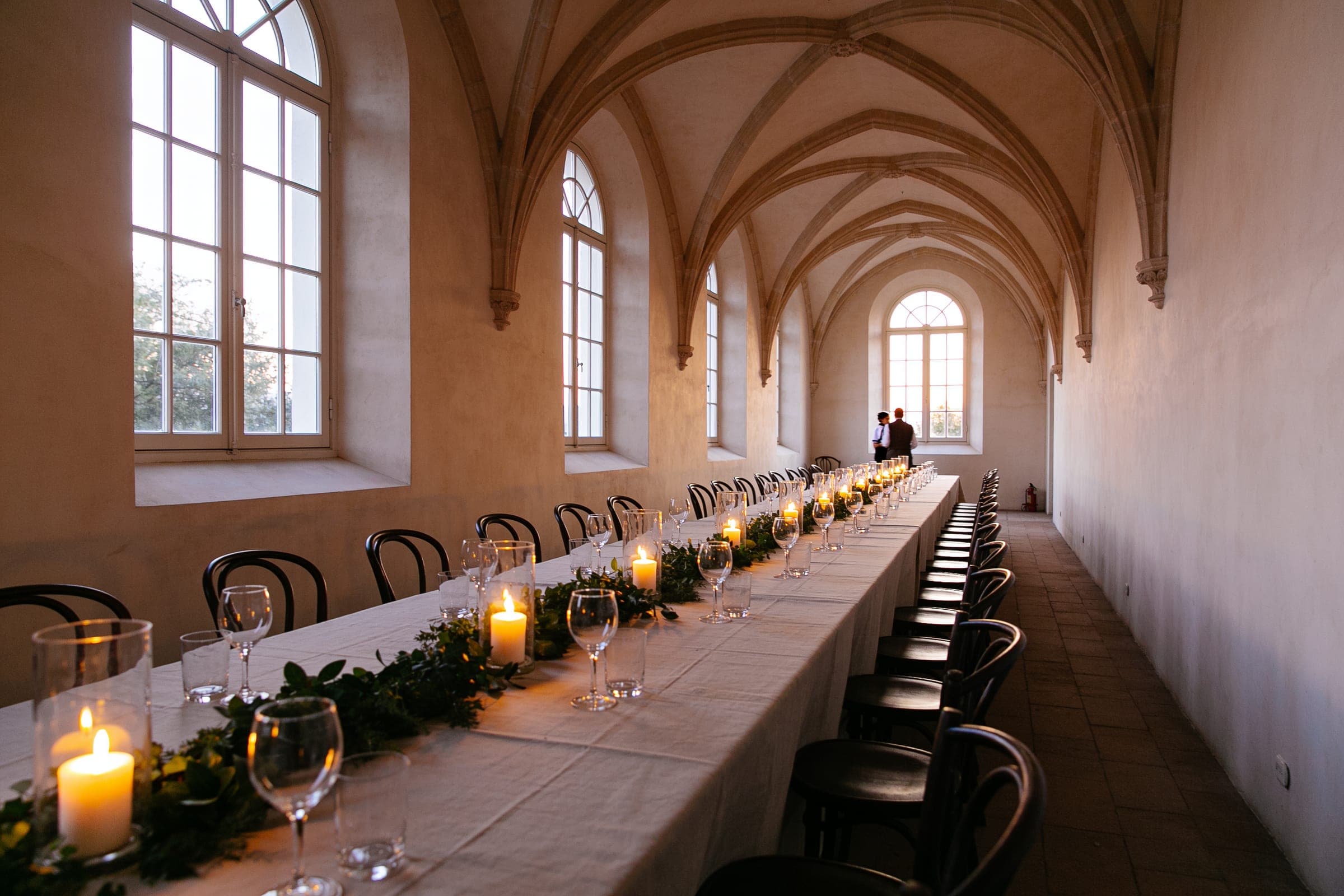
They also suit guest lists where people know each other, or where the couple wants them to. A single table mixes groups that would otherwise sit apart. For guest lists under roughly sixty, one long table can create a stronger sense of occasion than several smaller rounds. Beyond that, two or three parallel tables keep the effect while making the room workable.
A long table works when the room is long and the dinner is the point of the evening.
What it asks of you
Space for service
Staff need to reach both sides of the table. A long table against a wall, or two tables with a narrow gap between, slows service and makes it awkward. Ask your caterer how they would serve it, and how many staff they need to get a course to everyone while it is still hot.
A different seating plan
At a long table, people mainly talk to the three or four guests nearest to them. Plan the seating neighbor by neighbor. The ends of a long table can feel far from the couple, so place people there who will make the most of it.
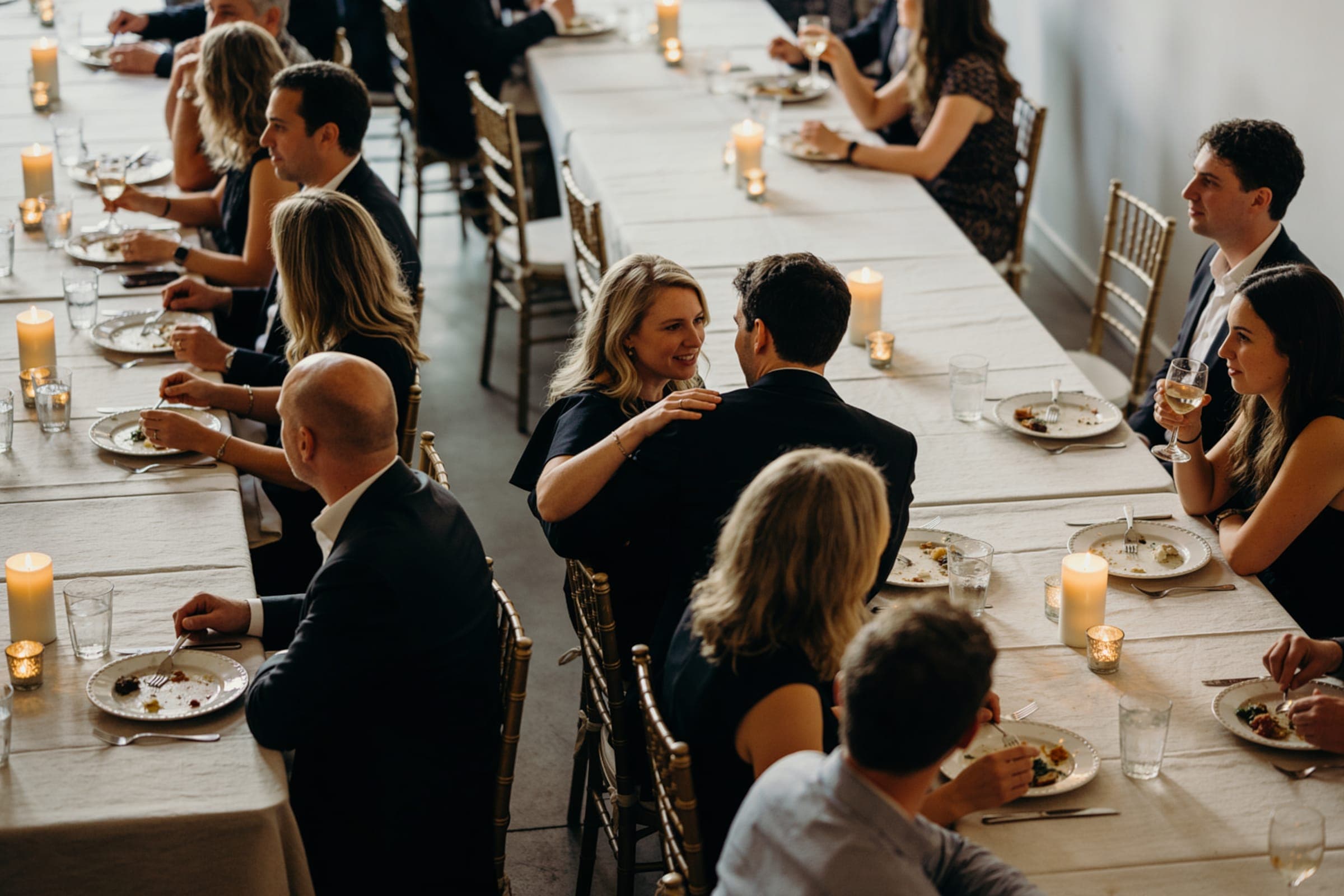
Low decoration
Tall arrangements interrupt the view along a long table and across it. Low flowers, candles and the table setting itself carry the decoration. See how to make the table feel considered.
Service style
Plated service works at a long table if there is room to move. Sharing platters passed along the table suit the format well, but they take up table space and need a caterer who does it regularly. A long table also works with a simpler meal served with care. Decide the service before the decor, because it sets how much space is left on the table.

When a different arrangement is better
Choose a long table when
- The room is long, or the table can run through an outdoor space.
- Dinner is the center of the evening.
- The guest list is small enough for one or a few tables.
Consider a mix or rounds when
- The room is square or irregular.
- Many guests do not know each other and would rather sit in groups.
- Dancing will happen in the same room right after dinner.
A mix can combine both: one long table for close family and friends, with smaller tables around it. How a reception room should work compares the options.
In different settings
The format adapts to the place. On a villa terrace it follows the balustrade and the view. Between vines, it follows the rows. In a courtyard, it runs the length of the space. In a barn, it runs under the beams. By the sea, it needs shelter from the wind. Vineyard and countryside weddings and the garden and courtyard edit show how the setting shapes it, and the case for candlelight covers the hours after sunset.