The Edit: Candlelight
The Case for a Candlelit Wedding Reception
Evening atmosphere comes from light more than decoration. How candlelight works in a room, what a space needs for it to be enough, and how to plan it with the venue's rules in mind.
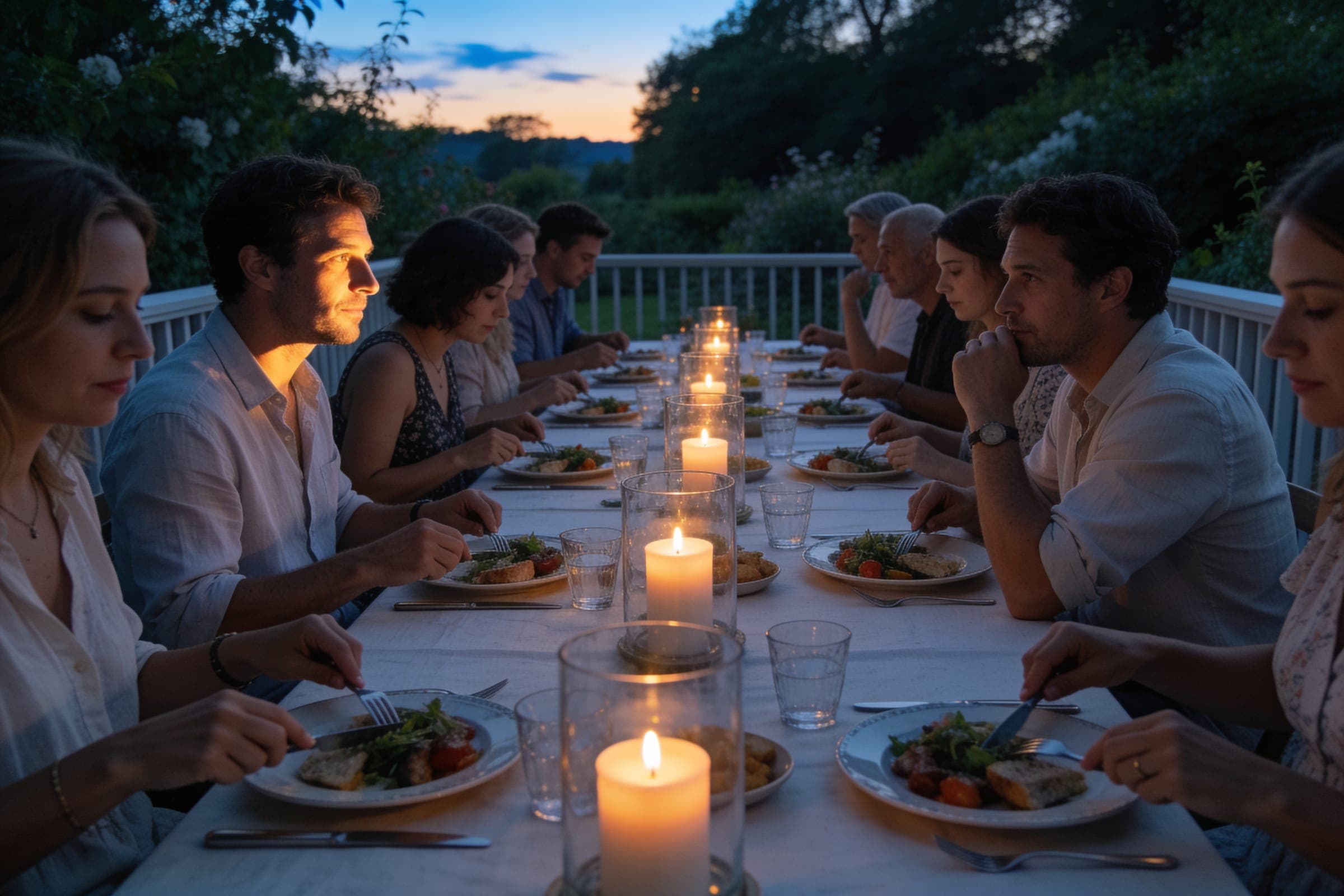
Most of the atmosphere at an evening reception is created by light. The same room with the same flowers can feel like a conference dinner or a private celebration depending on how it is lit. Candlelight is the oldest way to create the second, and it remains one of the most effective, because it is low, warm and close to people's faces.
The case for it is that it lets you do less. With good candlelight, flowers can be smaller, the room can be left mostly as it is, and the evening still feels considered.
Why low light works
Overhead lighting spreads evenly across a room. It shows everything, including the parts you would rather not see. Candlelight falls off quickly. It lights the table and the faces around it, and lets the room recede. Guests feel closer together because the lit space is smaller.
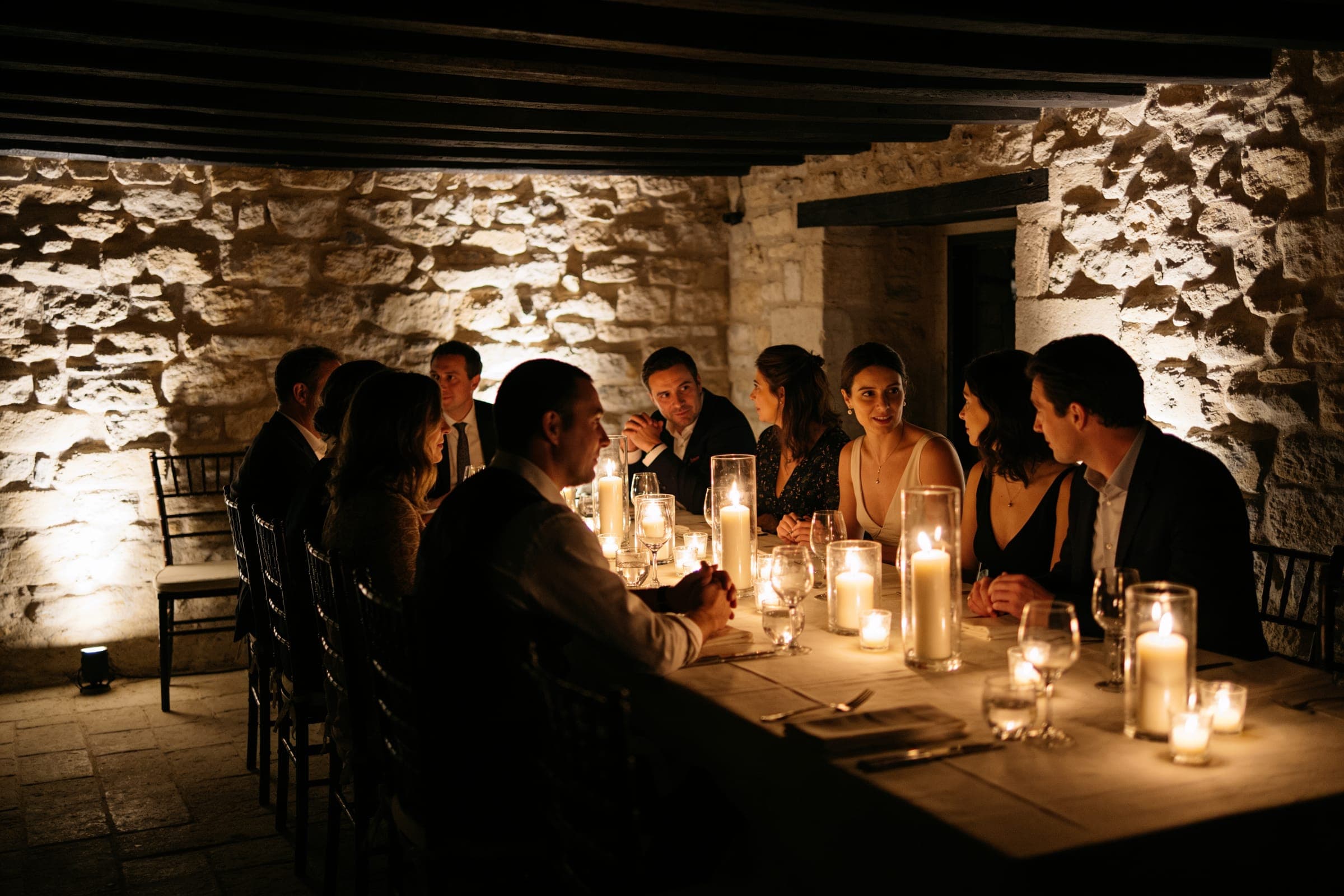
Candlelight also flatters materials. Glass, linen, silverware, stone and wood all look richer under it. This is part of why a simple table can look complete once the candles are lit.
Light the table and the faces. Let the room fall into shadow.
What the room needs
Candlelight is not enough on its own in every room. In very large, high or open spaces, candles alone read as small points in a large darkness. Rooms with character on the walls (stone, timber, plaster, arches) respond best, because the edges of the candlelight catch on them.
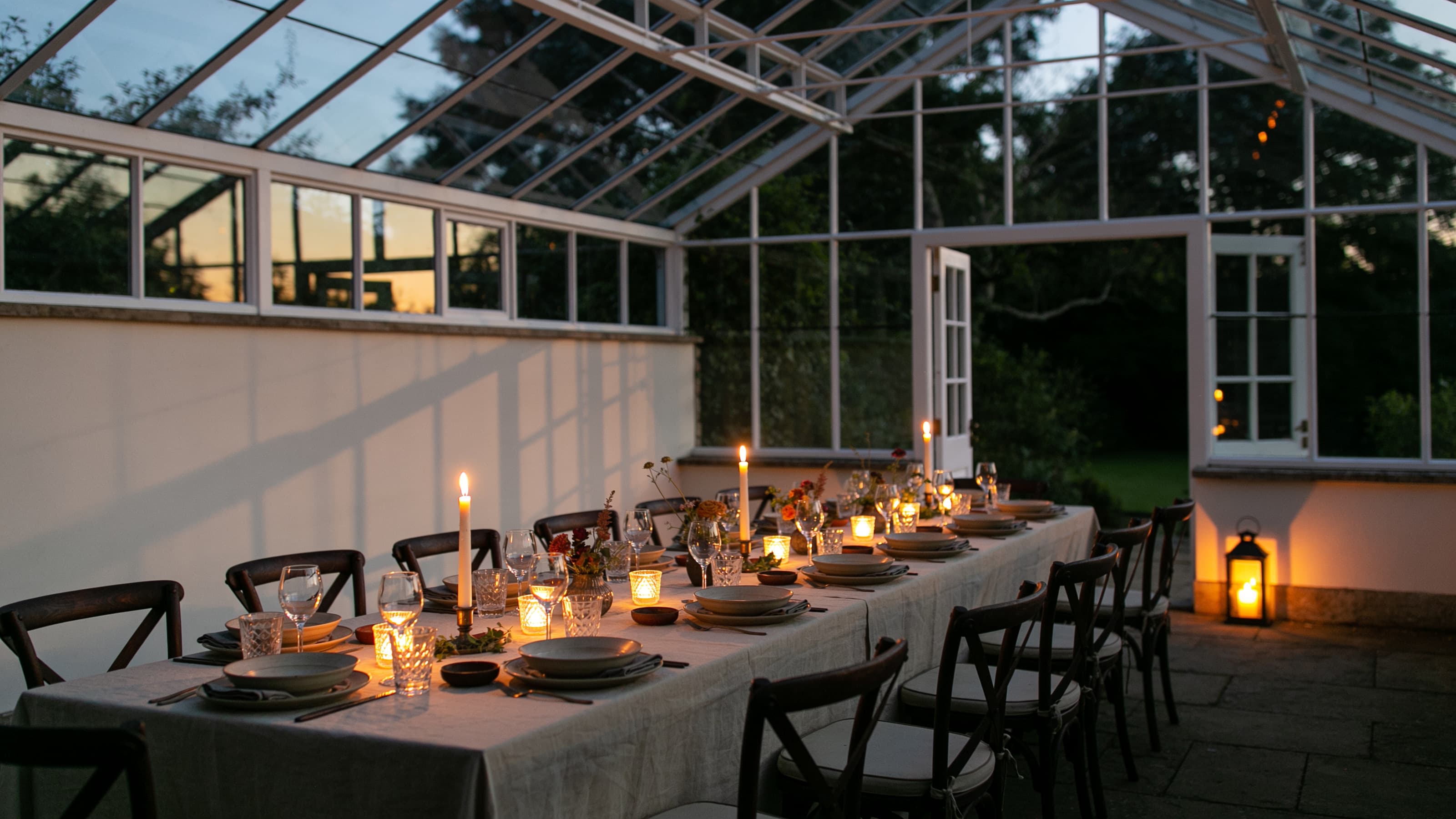
Glass rooms are a special case. After dark, each flame is reflected in the panes around it, multiplying the light. The greenhouse wedding edit covers this in more detail.
In a garden or open space, candlelight usually needs support: warm light in the trees, lanterns along paths, or dinner set close to a building with lit windows. A courtyard, with walls to hold the light, often needs no such help.
Quantity and placement
Candles look sparse faster than most people expect. A few scattered along a long table barely register once the room is dark. Grouping them, or running them in a continuous line down the center, gives a warmer and more even light. Mix heights so some flames sit at face level and some lower, but keep the tallest below eye level across the table.
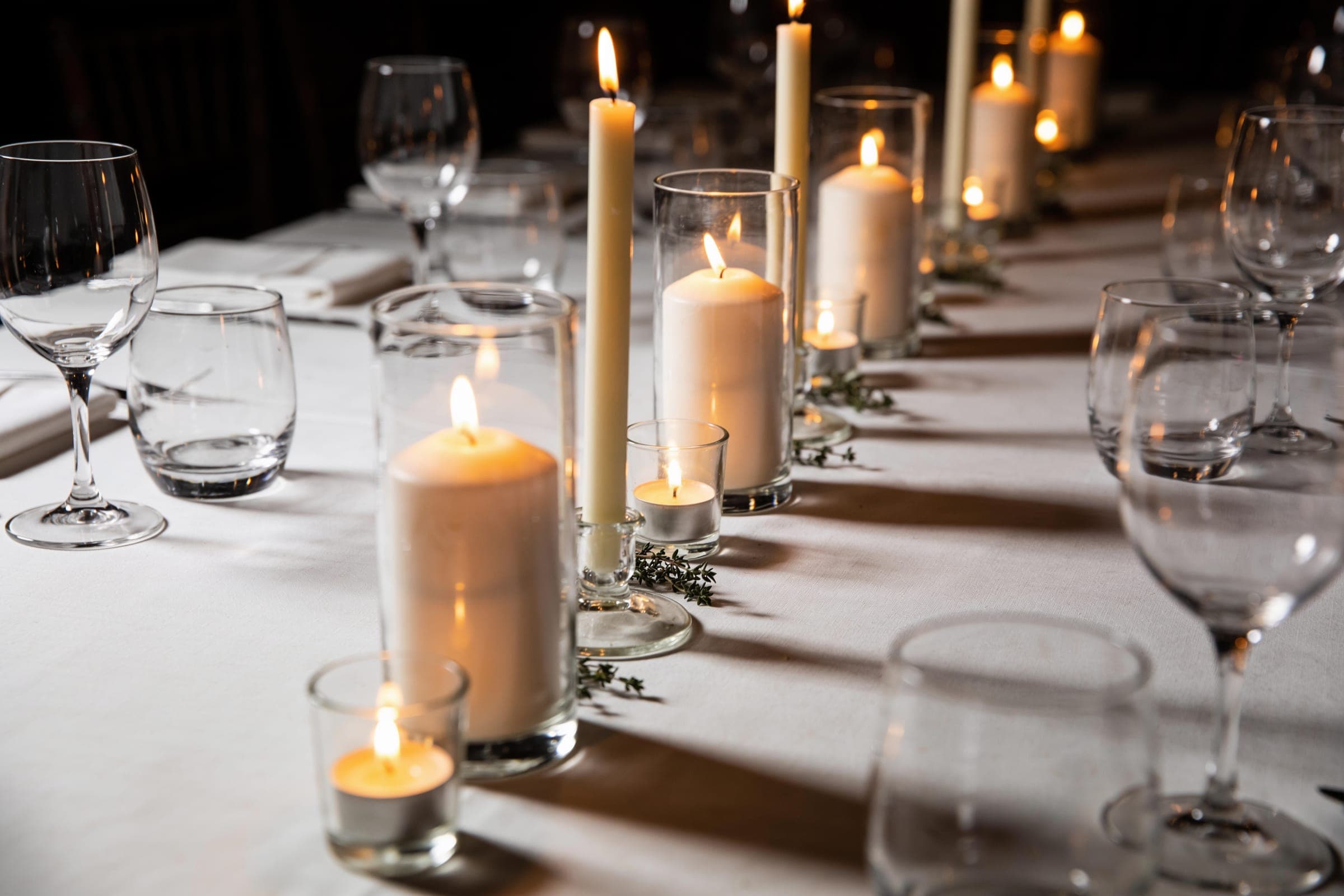
Candles in glass holders are steadier, more practical outdoors and often required by venues. Unscented candles are best near food. For how candles sit alongside flowers and glassware, see wedding tablescapes.
Keep every light warm
Candlelight is warm in color. Any other light in the room should match it, or the candles will look weak and the room will look mixed. Cool white LED fittings and the glow of a kitchen doorway both compete. Ask whether the venue's lights can be dimmed, and which decorative fittings can be turned off during dinner. Emergency and exit lighting stays as the venue requires.
Plan for the moments when more light is needed: the caterers serving, a speech, the change to dancing. Dimmable warm lighting that can be brought up briefly is better than switching the overhead lights on at full strength.
Safety and venue rules come first
Where open flames are not allowed, good LED candles in glass holders can give much of the same effect at a distance. Mixing a smaller number of real candles, where permitted, with LED ones is a common compromise.
Candlelight through the year
In winter, darkness comes early, so candlelight can carry most of the reception. In summer, dinner may begin in daylight and the candles only matter later, so plan how the table looks in both conditions. Wedding ideas by season looks at how the time of year changes the evening. For settings that particularly suit candlelight, see the coastal edit for sheltered terraces and the case for a long-table dinner.