
The Edit: Seasons
Wedding Ideas by Season: What the Setting Changes
Spring, summer, fall and winter change far more than the palette. They move the light, the hours of the day, what can happen outdoors and what the venue looks like. What each season changes, and how to plan with it.
Seasonal wedding ideas often come down to color: pastels for spring, bright for summer, rust for autumn, deep red for winter. Color is the least of it. The season decides when the light fades, whether guests can be outdoors after dark, what the garden or the landscape looks like, and how a room feels when people arrive in it.
What follows describes those changes in general terms. The actual conditions depend on where you are marrying.
What changes, season by season
Spring
- Light and hours
- Days lengthening. Evenings can still be short and cool.
- The setting
- Fresh growth, blossom, pale green. Gardens and glasshouses are at an early peak.
- Plan for
- Changeable weather and cold evenings. A covered, heated option for dinner.
Summer
- Light and hours
- Long days and late light. Dinner may start in daylight.
- The setting
- Gardens full, landscapes open. Outdoor space is most usable.
- Plan for
- Heat and strong midday sun. Shade for guests, a later ceremony, and how the table looks before and after dark.
Fall
- Light and hours
- Evenings drawing in. Low, warm light in the afternoon.
- The setting
- Changing leaves, harvest, fuller color in rural settings.
- Plan for
- Earlier sunsets. A ceremony timed for the light, and an evening that moves indoors.
Winter
- Light and hours
- Short days. Darkness early in the evening.
- The setting
- Bare trees, evergreens, rooms with fires and candlelight.
- Plan for
- An indoor day, a short daylight window for photographs and guests' travel in poor weather.
The light decides the timing
The single most useful thing to know is what time the light begins to go on your date. It decides when the ceremony should happen if you want it in good light, how long the drinks reception can last before dusk, and when dinner will move into candlelight. In summer, a ceremony can be late in the afternoon. In winter, it may need to be around midday.
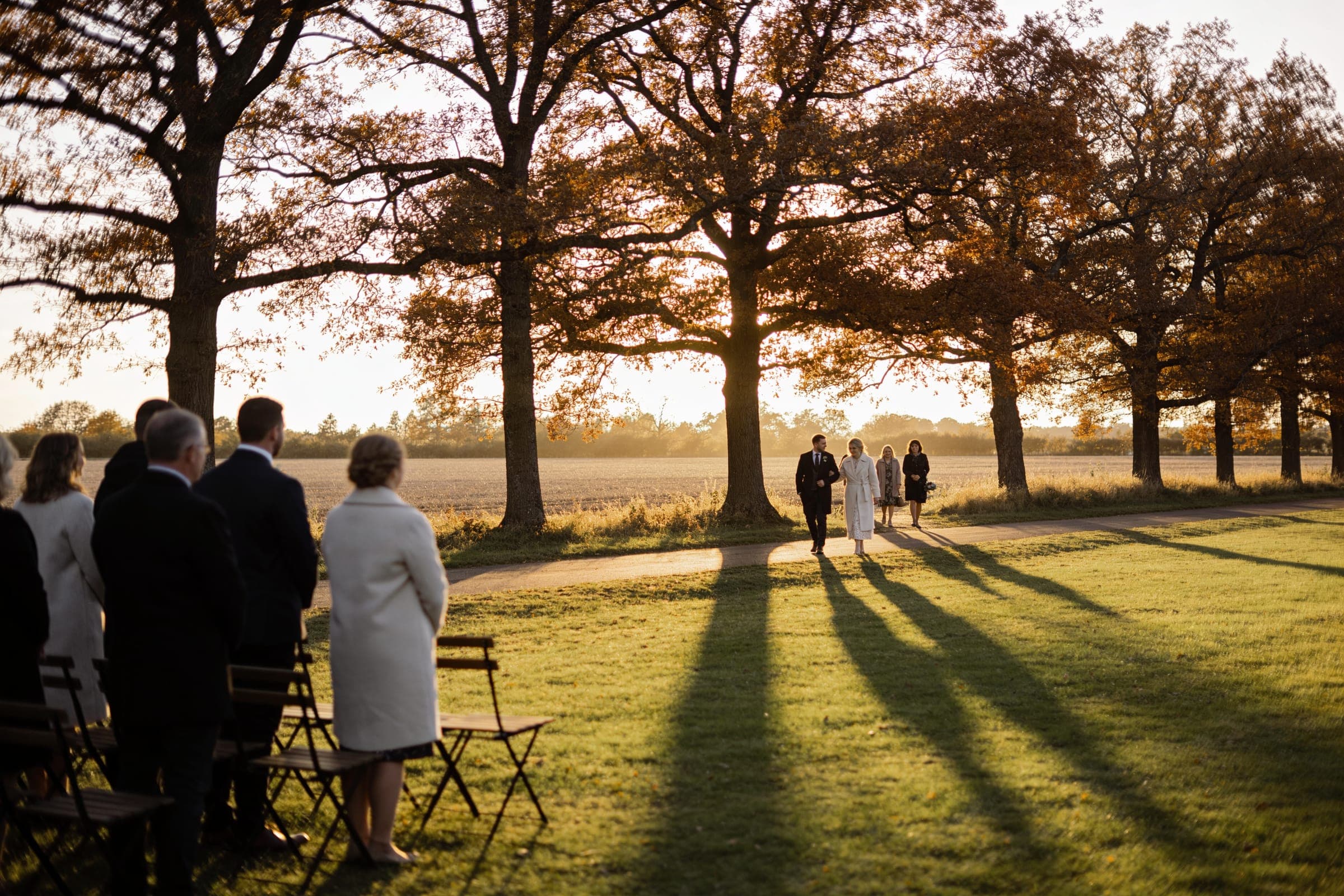
Plan the day around the light first. The rest of the schedule follows.
How the venue changes
A venue seen in one season can be almost unrecognizable in another. A garden full in June may be bare in November. A barn that is pleasant on a September evening may be cold in March. A glasshouse can be too warm in midsummer. When you visit, ask to see photographs of the venue in your month, not only its best one.
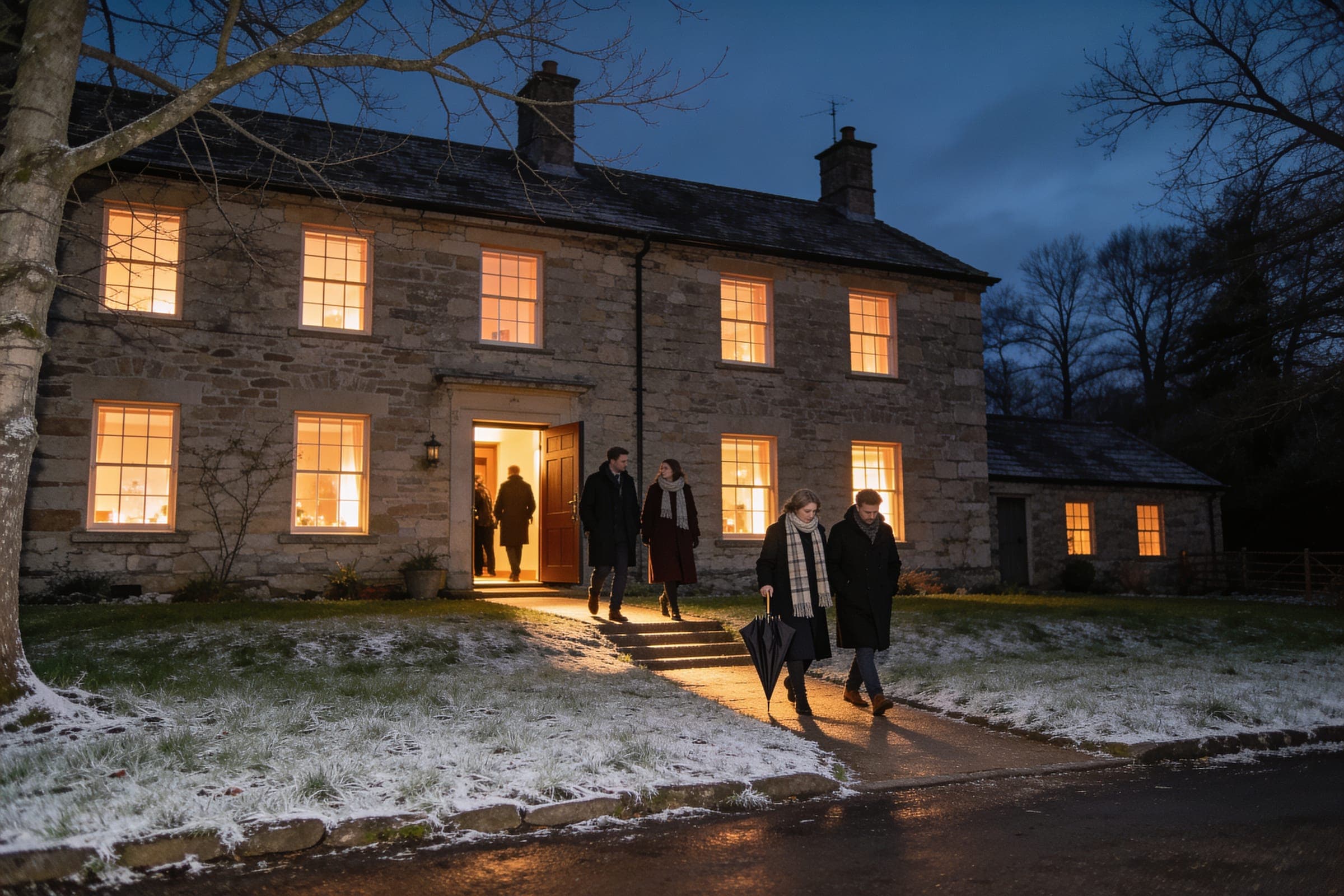
Some settings favour particular seasons. Greenhouses often suit spring and autumn. Vineyards and countryside change most through the year. Candlelit receptions come into their own in winter.
Guests feel the season first
Before anyone notices the flowers, they notice whether they are too hot or too cold. The season decides what guests need at each point of the day: shade and water at a summer ceremony, somewhere warm to wait between the ceremony and dinner in spring, a cloakroom and a dry route from the car in winter.
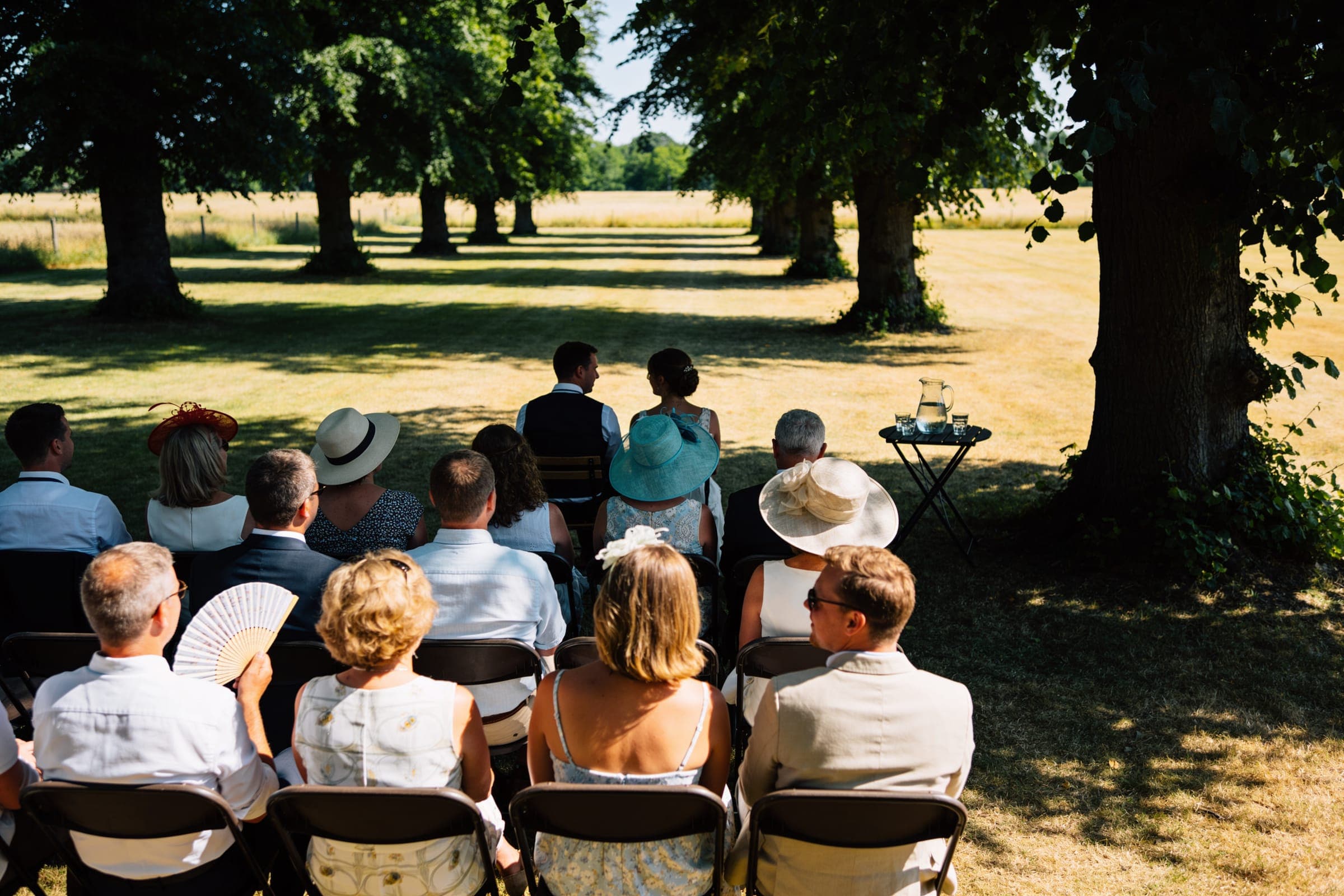
It also shapes what people wear, which affects the rest of the plan. Long outdoor walks, lawns and gravel suit summer clothes and flat shoes better than winter coats and heels. If the invitation can tell guests what the day involves (outdoors after dark, a walk across grass, an evening by the water), they can dress for it.
What to take from the season
The season can supply flowers, food and color. Flowers in season locally are usually fresher and more at home in the setting. Seasonal menus tend to be better, and the palette of the landscape at that time of year is already in view. A palette taken from the place and flowers that belong in the setting both work best when they follow the season rather than resist it.