
The Edit: Tablescapes
Wedding Tablescapes: How to Make the Table Feel Considered
Linen, glassware, plates, flowers and light are one composition, and guests look at it closely for hours. How the parts work together, which to decide first, and how to stop before the table is over-styled.
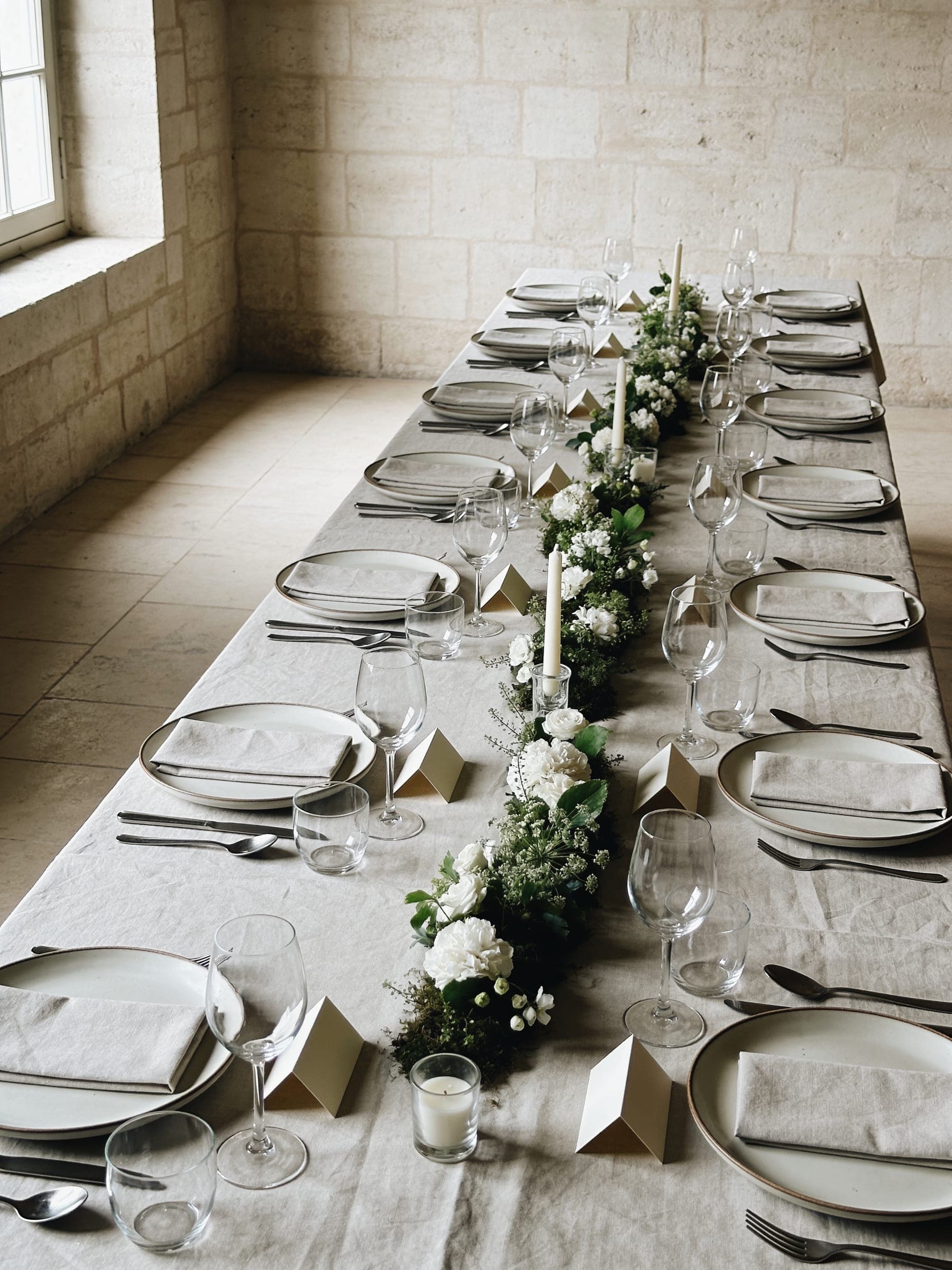
The table is the part of a wedding guests spend the most time with. They sit at it for hours, close enough to notice the weight of the linen, the shape of a glass and whether the flowers are in the way of the person opposite. That is the reason to plan it carefully, and also the reason to plan it with restraint. A table is for eating, talking and passing things. Anything that makes that harder is a mistake, however good it looks in a photograph taken before guests arrive.
Decide in this order
- The table itself. Shape, size and material. A good wooden table can be left bare. A hired trestle needs a cloth. Reception layouts and the case for a long table decide what you are dressing.
- The service. Plated, shared, family style. Sharing platters need space in the middle, which changes everything placed there.
- Linen. It sets the base color and texture for everything else.
- Plates, glassware and cutlery. The objects each guest uses. Often the most noticed and least discussed.
- Light. Candles and their holders.
- Flowers. Last, because they fill the space the other decisions leave.
Most over-styled tables are the result of choosing flowers first and fitting everything else around them.
Linen sets the tone
Linen does more to set the character of a table than any other single element. Crisp white reads as formal. Washed, slightly creased linen in stone, oatmeal or a muted color reads as relaxed. A heavier cloth that falls to the floor looks more generous than one that stops at the table's edge.
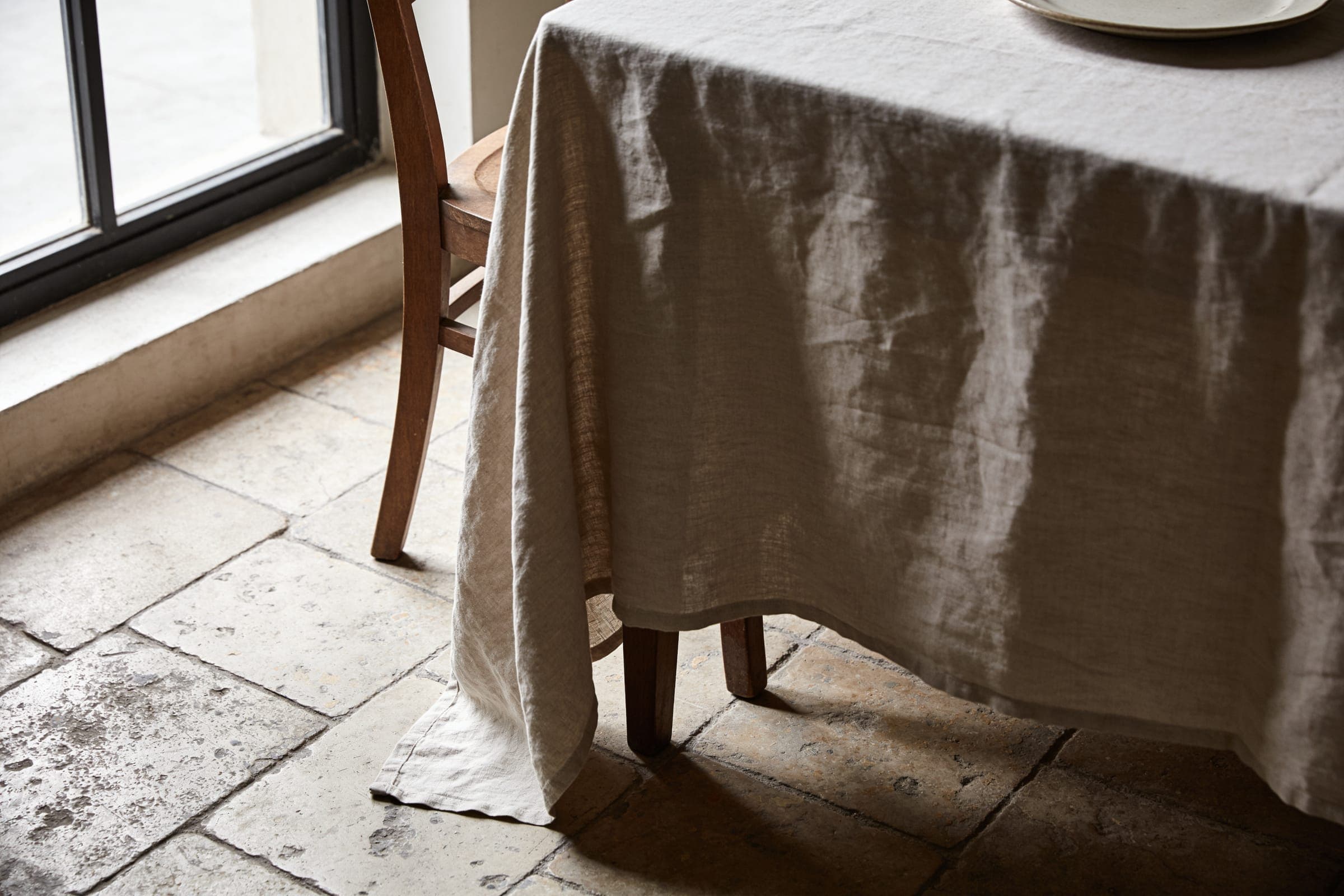
The color should come from the setting. A stone courtyard suits a warm neutral. A glasshouse full of green can take white or a pale gray-green. A coastal table often looks best in linen close to the color of sand or weathered wood. Wedding color palettes follows this from the place.
The objects people hold
Plates, glasses and cutlery are handled all evening. Their weight and proportion matter more than their pattern. A plain, well-made glass with a thin rim will be noticed by more guests than a colored one. A single style of plate across the table is calmer than a mix unless the mix is deliberate.
Each place setting should leave elbow room. Count how many glasses you actually need. A crowded setting looks formal and is awkward to use.
Flowers, low and in proportion
Low arrangements keep conversation open across the table. Stronger color can then do the visual work without increasing the scale. A continuous line of low flowers along a long table, or a few small vessels grouped between candles, is usually enough.
If guests cannot see each other across the table, the flowers are too tall.
Tall arrangements have a place in large rooms with round tables, where they can rise above eye level on a narrow stem. Most long tables are better without them. Wedding flowers that belong in the setting covers scale in more depth.
Candlelight
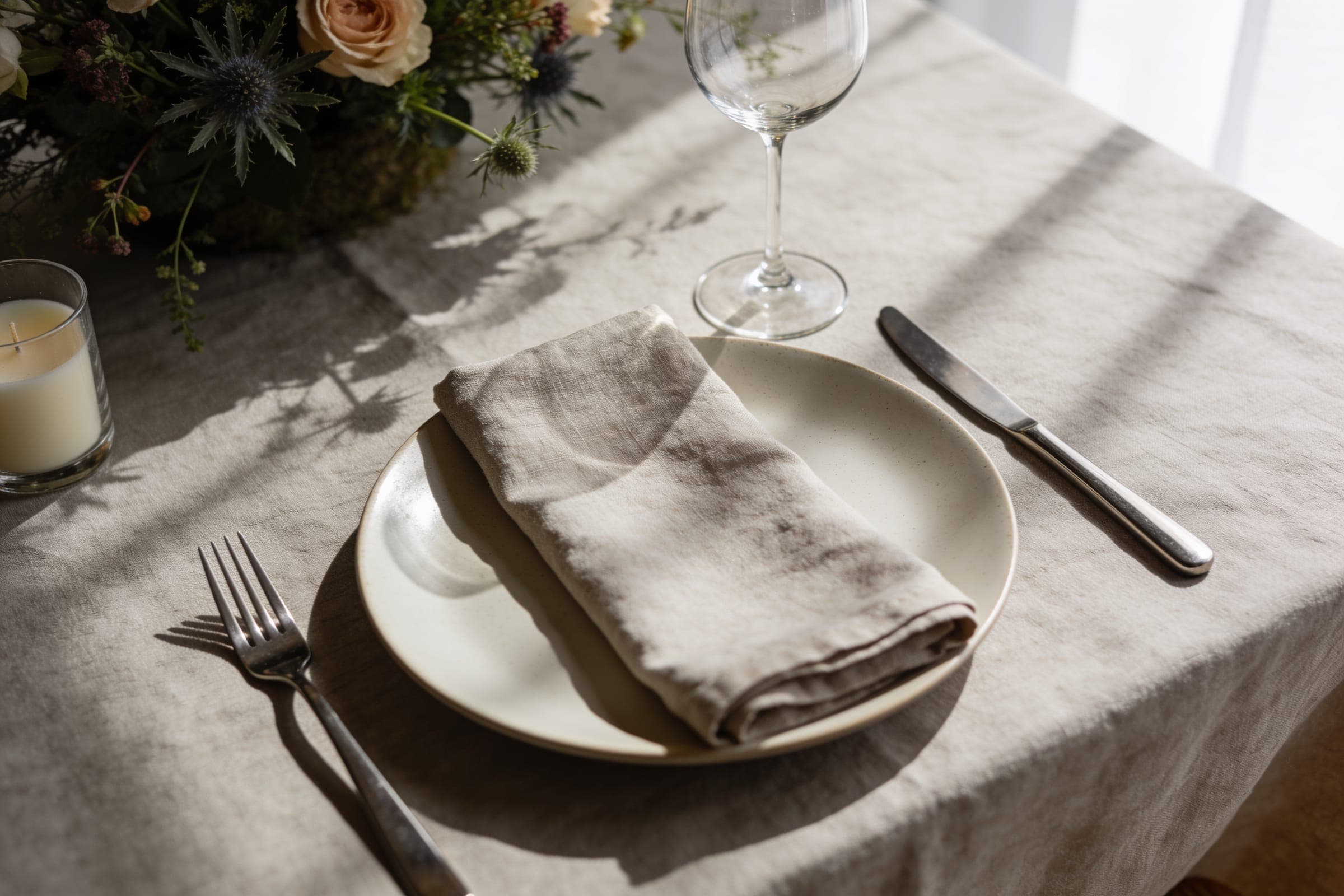
Restrained flowers leave room for candlelight, glassware and the shape of the table itself. After dark, the candles become the most important element on the table: they decide what is visible. The case for a candlelit reception covers quantity, placement and the venue rules that come first.
Where to stop
Before adding a menu card, a napkin ring, a sprig of herbs, a favour and a name card to every setting, ask what each is for. A place card helps people find their seat. A menu is useful at a long dinner. Items that do nothing but decorate tend to end up pushed aside. The details that make a wedding feel cohesive looks at which small objects are worth including.