
The Edit: Coastal weddings
The Coastal Wedding Edit
A coastal wedding is shaped by wind, open light and a horizon that is always in view. Here is how to plan a ceremony and dinner around those conditions, without the shells, driftwood and nautical props.
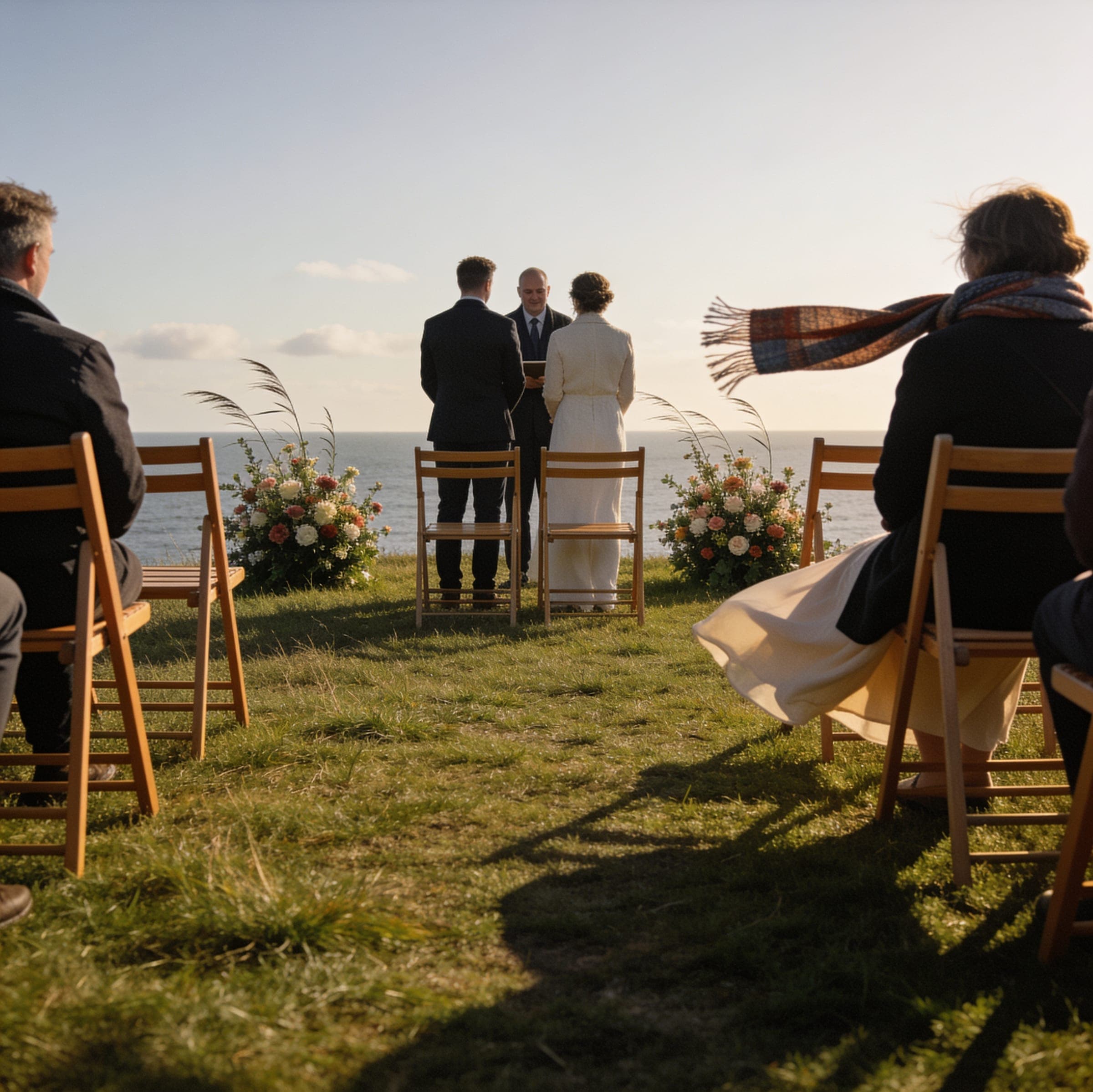
The sea gives a wedding a strong, simple backdrop. It also brings conditions most inland venues never have to consider: steady wind, glare off the water, salt in the air and very little shelter. A coastal wedding works when it is planned around those conditions first and styled second.
The clichés of the beach wedding usually come from styling the idea of the sea. The actual place is more interesting. Starting from the actual coast (rock or dune, cliff or harbor, pale light or gray) produces something more specific.
Let the horizon do the work
The strongest feature of any coastal setting is a clear horizontal line. A ceremony that faces it needs almost nothing else. Tall arches and large floral structures interrupt the one thing guests came to see, and in wind they become a risk.
Keep everything lower than the horizon, and the sea stays the focal point.
Low arrangements at the ends of the rows, or a simple marker at the front, keep the view open. For the reasoning behind orientation and focal points across different settings, see wedding ceremony ideas built around the setting.
Plan for wind before you plan for style
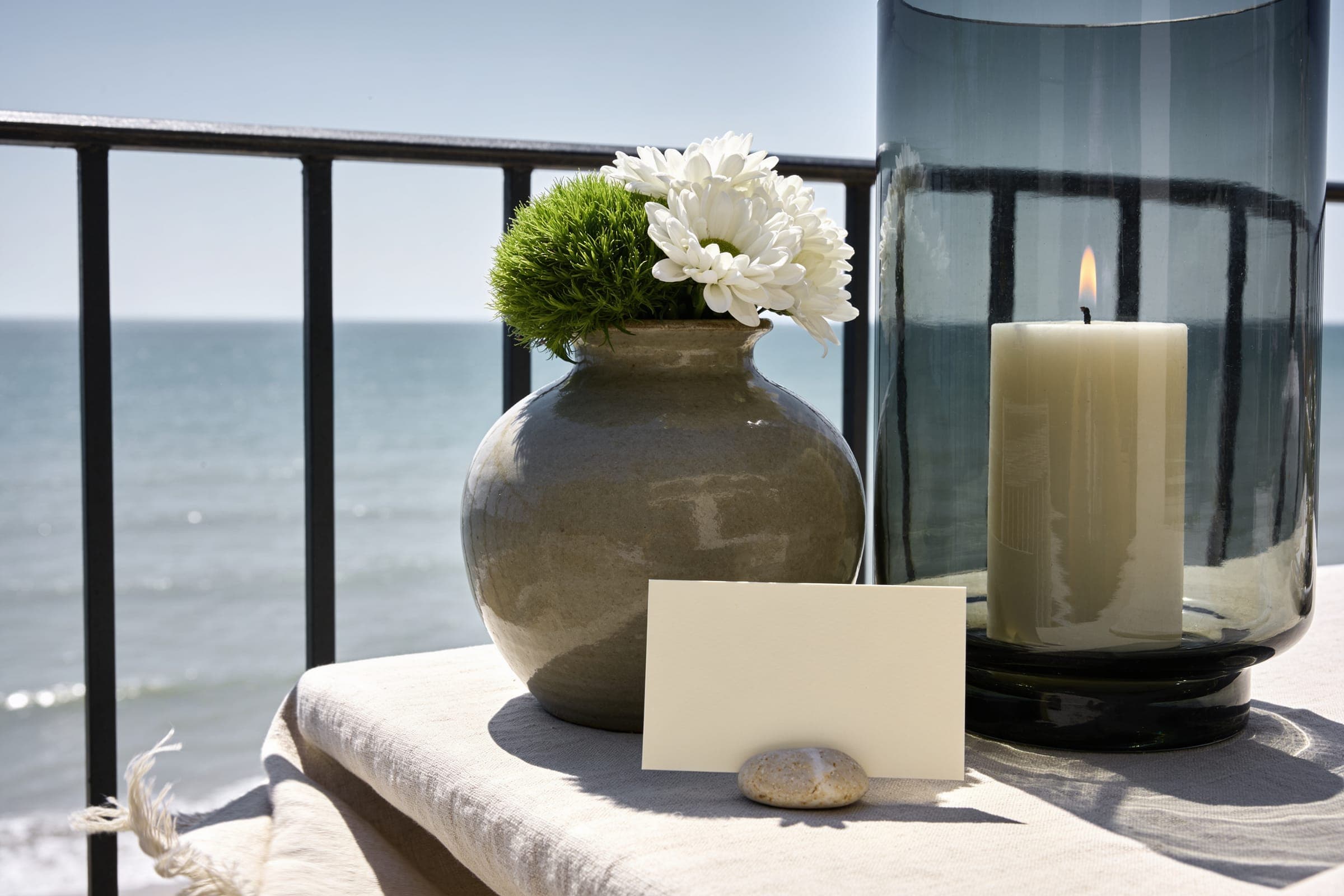
Wind affects almost every decision on the coast. Veils and hair move. Stationery lifts off tables. Light arrangements tip. Candles in open holders go out or become unsafe. Sound carries away, so vows can be lost to the back rows without discreet amplification.
- Choose heavier vessels and weighted place cards.
- Use candles only in deep glass or hurricane holders, where the venue permits them at all.
- Keep florals compact and low.
- Ask your officiant or venue about a small, unobtrusive sound system for the ceremony.
Getting guests to the water
The most striking ceremony sites on a coast are often the hardest to reach: a headland path, steps cut into rock, a beach below a cliff. Walk the route yourself in the shoes you would wear to a wedding. Sand is difficult for heels and for anyone unsteady on their feet. Steps without a handrail are a real problem for older guests.
If the best view is at the end of a difficult route, one answer is to hold the ceremony somewhere easier with part of the view, and take a smaller group, or just the couple, to the edge for photographs afterwards. Tell guests in advance what to expect underfoot, and what the wind might do to what they wear.
Timing the light
Midday light on the coast is bright and flat, and glare off the water is hard on guests facing it. Later in the day the light lowers and warms, and the sea turns from a bright surface into a color. Many coastal ceremonies are better placed later than an inland one would be, with dinner following as the light fades.
Check which way the ceremony site faces relative to the sun at your time of day. Facing a setting sun is uncomfortable for guests, and it puts the couple in silhouette.
An intimate dinner by the water
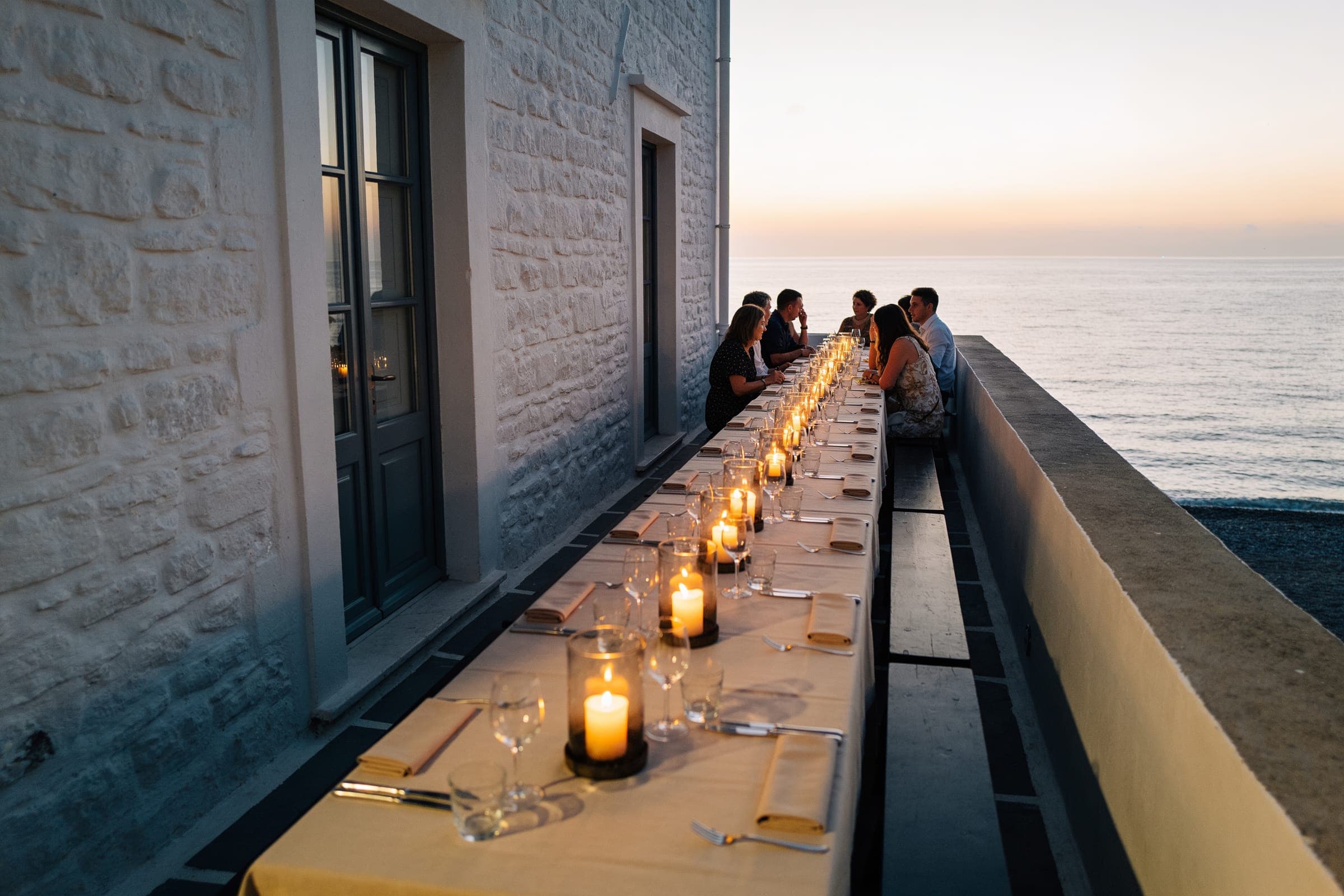
Open coastal settings can swallow a dinner. A terrace against a building, a sheltered garden or a restaurant room with the doors open gives the table something to sit against and cuts the wind. The view can stay in the background.
After dark, the sea disappears. The atmosphere then comes from the table and whatever light the building gives. Candlelight in deep glass, low and plentiful, is usually enough when there is some shelter. The case for a candlelit wedding reception looks at how much light a dinner needs.
The table
Coastal light is cool and bright, and it bleaches color. Linen, stone-colored ceramics and clear glass hold up well in it. Blue on blue tends to disappear against the water. Warmer accents (terracotta, rust, a single deep flower) give the table weight.
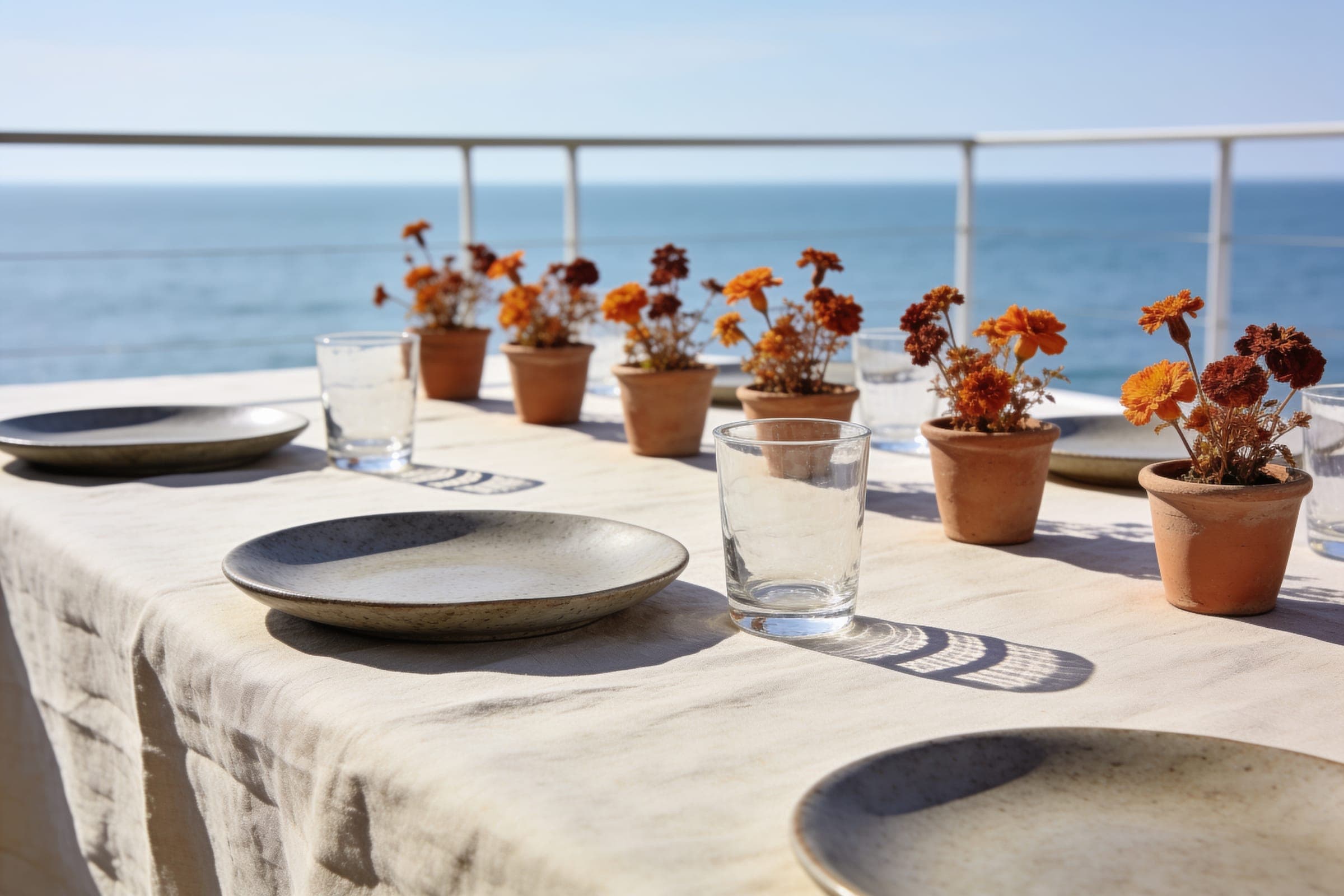
Resist the urge to theme. Shells, rope and anchors say "seaside" without saying anything about the specific place. A good wedding tablescape answers the setting through material and color, and a palette taken from the place will already include the sea.