The Edit: Greenhouses & glasshouses
The Greenhouse Wedding Edit
A glasshouse holds plants, architecture and changing light in one structure. This edit looks at how it can carry both the ceremony and the dinner, and what glass asks of you in heat, cold and darkness.
A greenhouse or conservatory solves a problem that gardens cannot: it gives a wedding the feeling of being outdoors, among plants and daylight, with a roof overhead. It also has a strong architecture of its own. The frame, the ribs of the roof and the repeated panes give a room its rhythm before anything is added.
That structure is the main reason to choose one. The ideas below are about letting it show.
The frame is the decoration
The lines of a glasshouse (uprights, glazing bars, the peak of the roof) lead the eye in one direction. In a long glasshouse, that direction is down the central aisle. Placing the ceremony at the end of that line, and the dinner table along it, works with the building rather than across it.
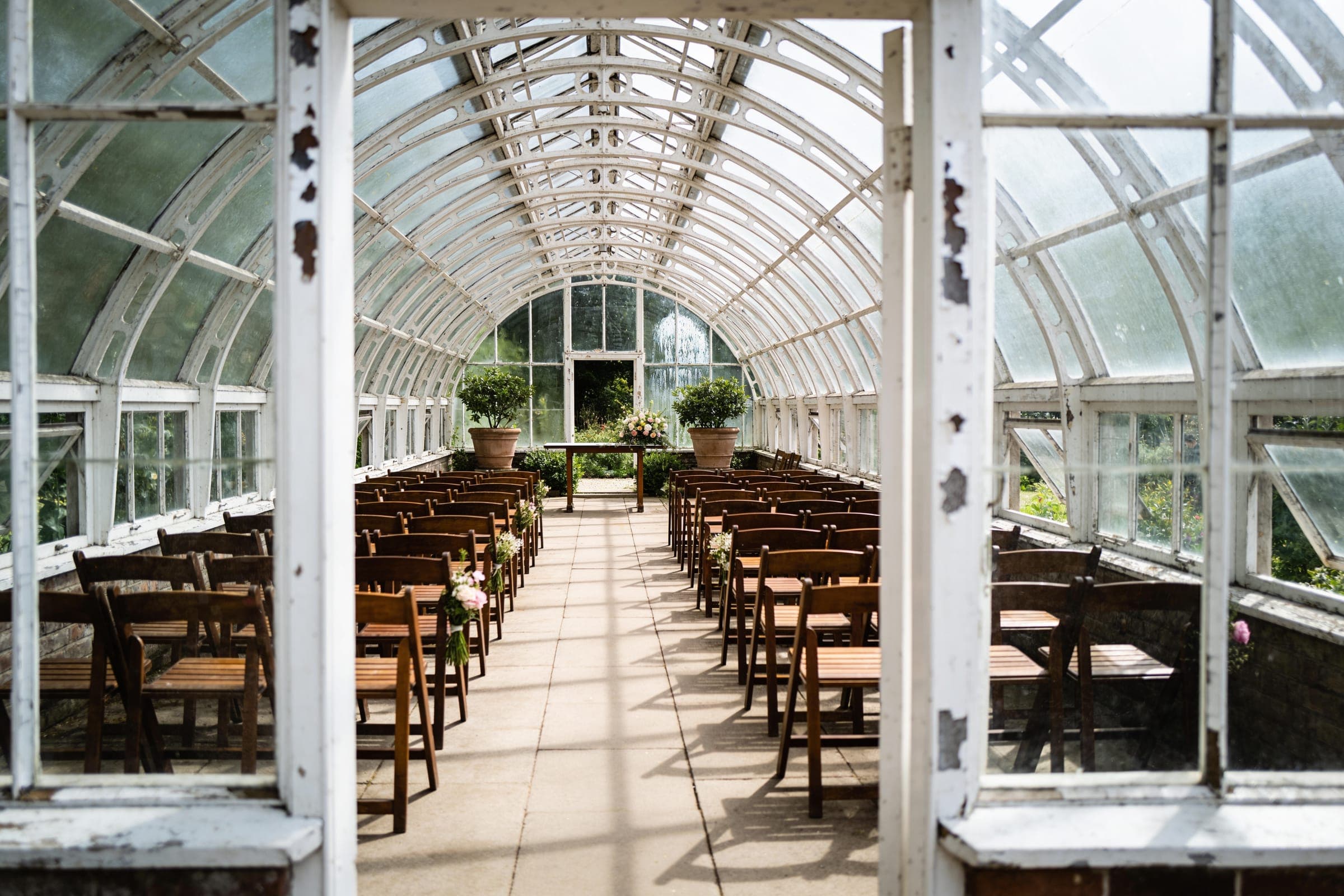
Because the structure already reads as decorative, heavy styling tends to fight it. Draping hides the frame. Large installations compete with the plants. The rooms that look most settled are usually the ones with the fewest additions.
Follow the line the architecture draws, and most of the layout decides itself.
One room for ceremony and dinner
Many glasshouses are a single space. Using it for both the ceremony and the reception is simple for guests, but it means the room has to be turned around between the two. Plan where guests go during that time, ideally a garden or terrace close by, and how long the change takes.
If the room is long and narrow, one long table often fits it better than several rounds, and it can be laid in advance at one end while the ceremony happens at the other. The case for a long-table wedding dinner and how a reception room should work cover the arrangement in more detail.
Heat, cold and the season
Glass gathers heat in sun and loses it quickly after dark. A glasshouse that is comfortable in the morning can be very warm by mid-afternoon in summer, and a spring evening can turn cold once the light goes. Shoulder seasons often suit a glasshouse better than midsummer.
For more on what each season changes about a setting, see wedding ideas by season.
After dark
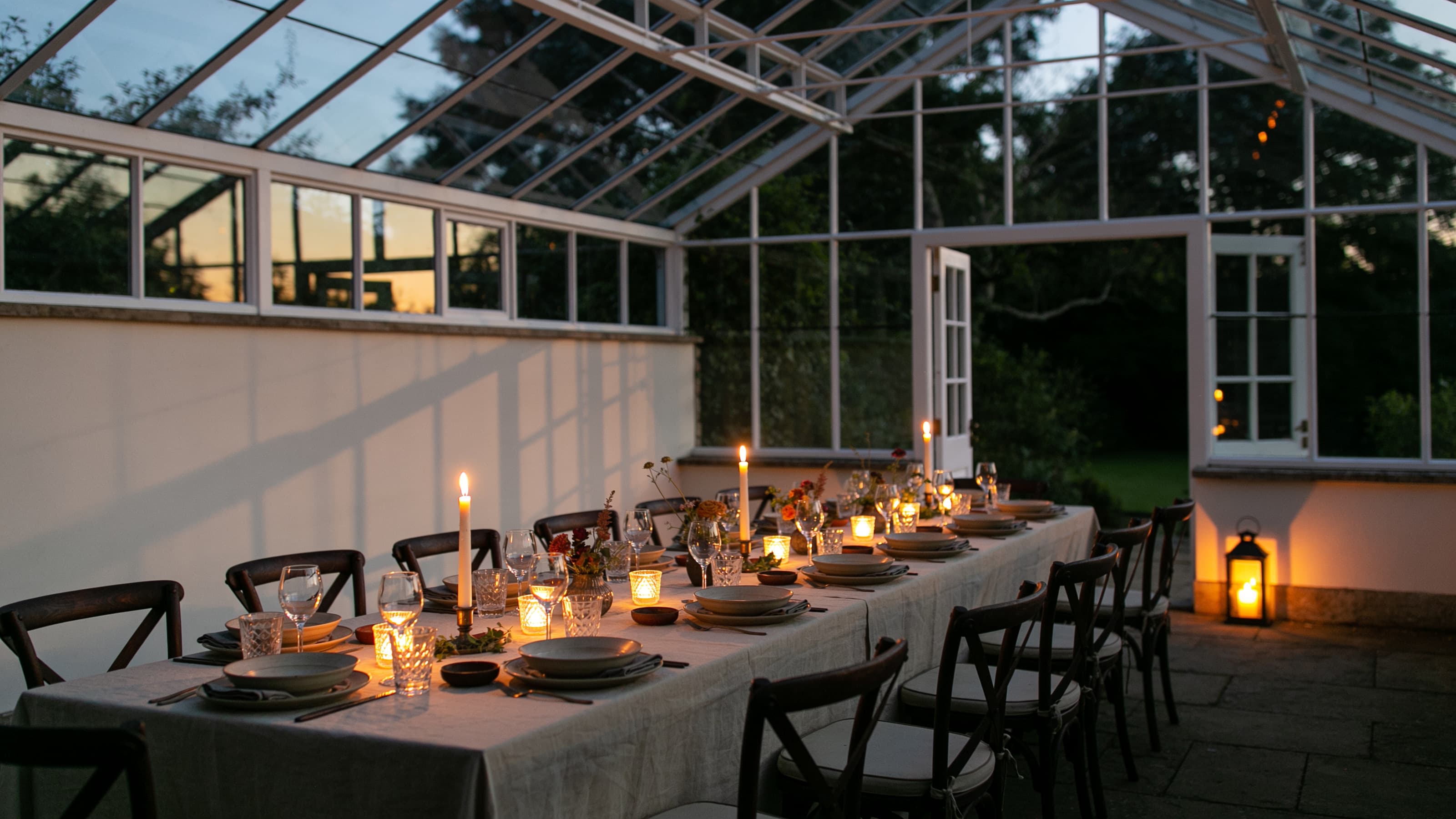
At night, glass stops being a window and becomes a mirror. Every candle is reflected in the panes around it, so a moderate number of flames reads as many more. This is the glasshouse's best hour, and it needs very little: low candlelight along the table and some light among the plants so the room keeps its depth.
Bright overhead lighting has the opposite effect. It reflects as hard points on every pane and flattens the space. The case for a candlelit wedding reception explains how to light a room this way.
Sound, and the space around the glass
Glass, tile and stone reflect sound. A glasshouse full of people talking over dinner can become loud quickly, and speeches can be hard to follow at the far end. Linen on the tables, cushions on benches and plants between groups all absorb some of it. Ask the venue whether speeches usually need a microphone in the space, and where music can go without filling the whole structure.
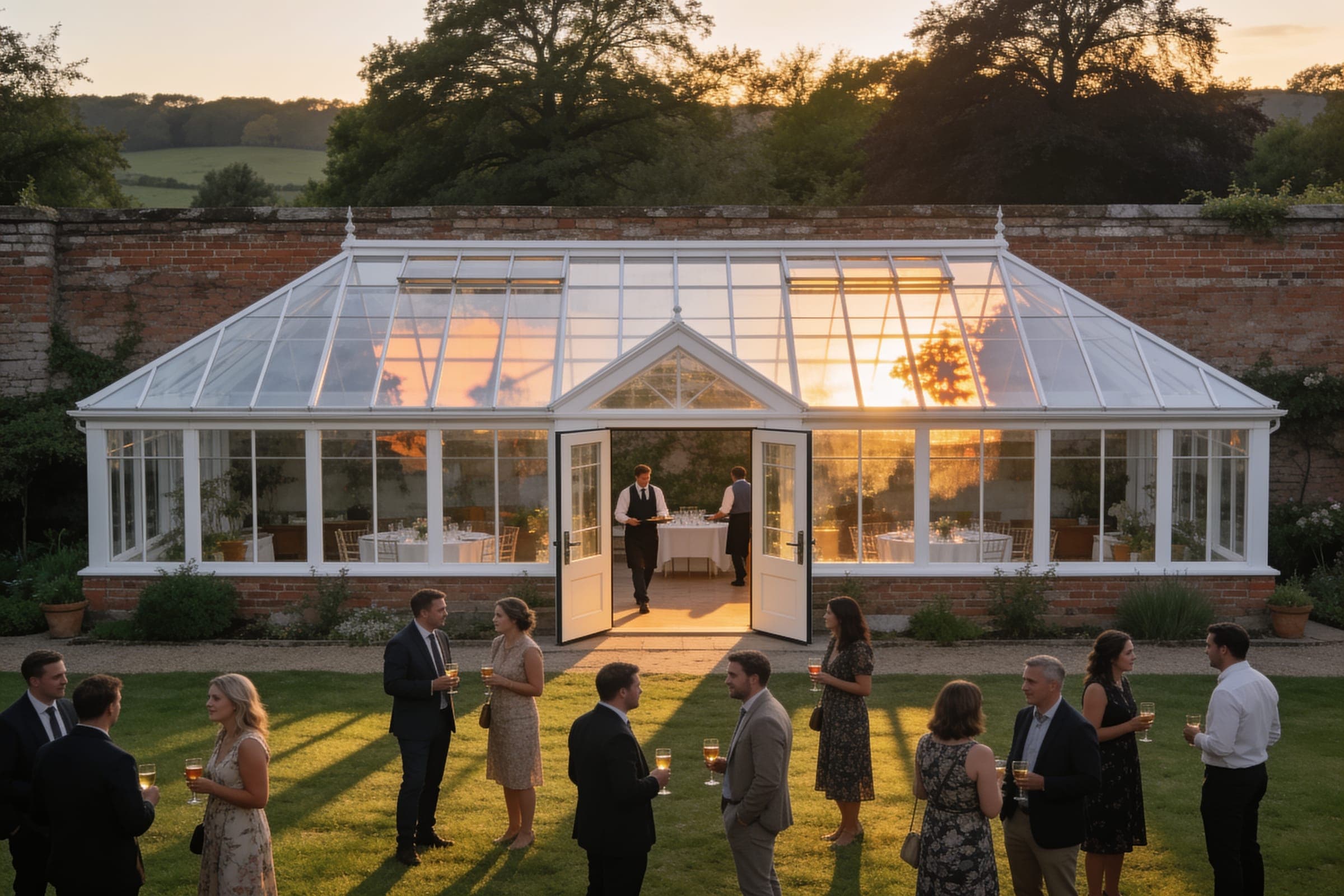
A glasshouse is rarely used on its own. It usually sits in a garden, and that garden becomes part of the day: the place for drinks while the room is turned, the view through the panes during dinner, the route guests walk to get there. Look at what is visible through the glass from the table. Service areas, car parks and neighboring buildings show clearly through a transparent wall, especially before dark.
Flowers among plants
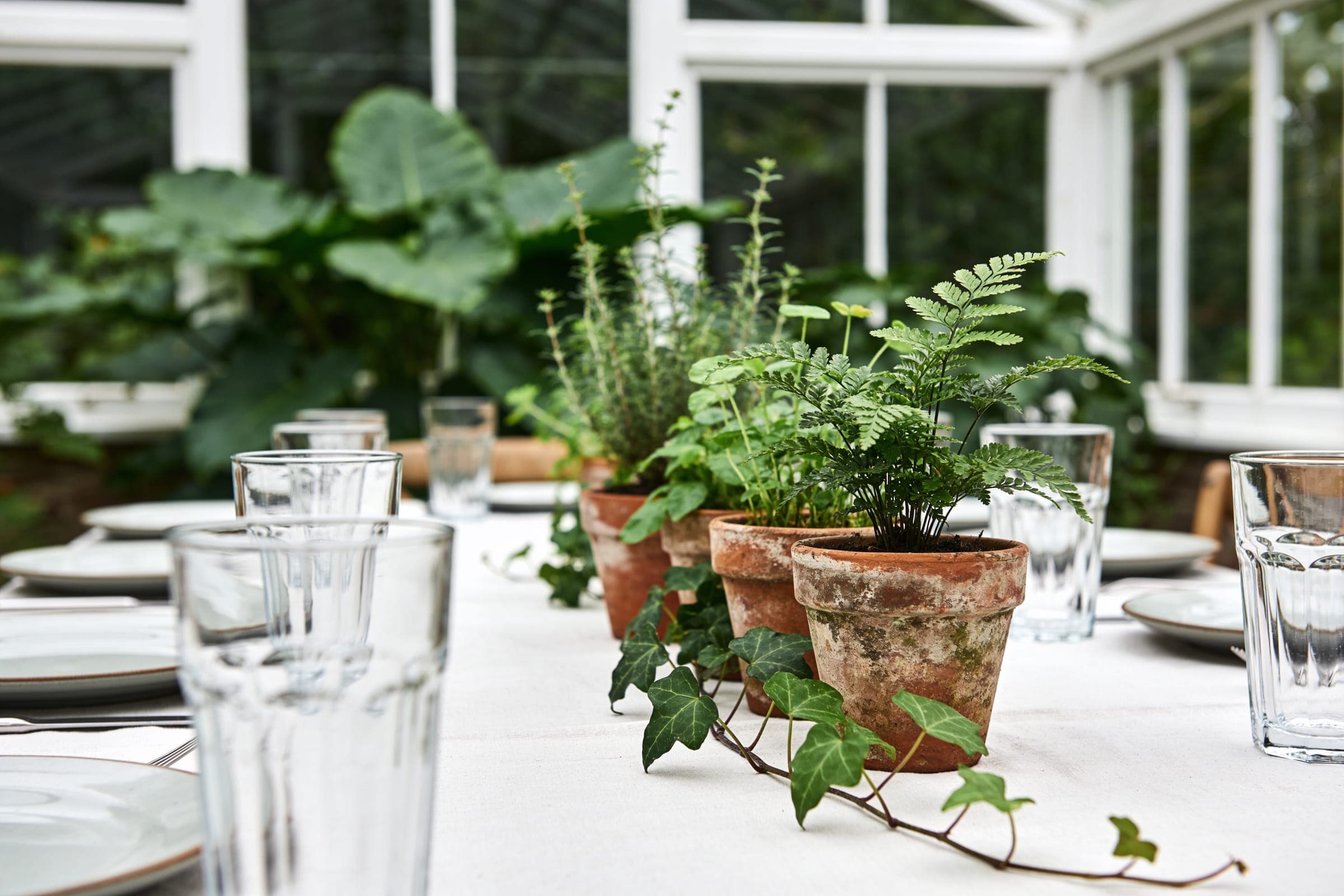
A glasshouse is already full of green. Cut flowers look most at home when they share its character: loose foliage, a single variety in quantity, or pots of growing plants on the table. Structured florist arrangements can look formal in a room that otherwise feels like a garden. Wedding flowers that belong in the setting goes further into scale and placement.