
The Edit: Gardens & courtyards
The Garden & Courtyard Wedding Edit
Hedges, walls, gravel and trees already give a green or enclosed space its structure. This edit is about working with that structure for the ceremony and dinner, and adding very little to it.
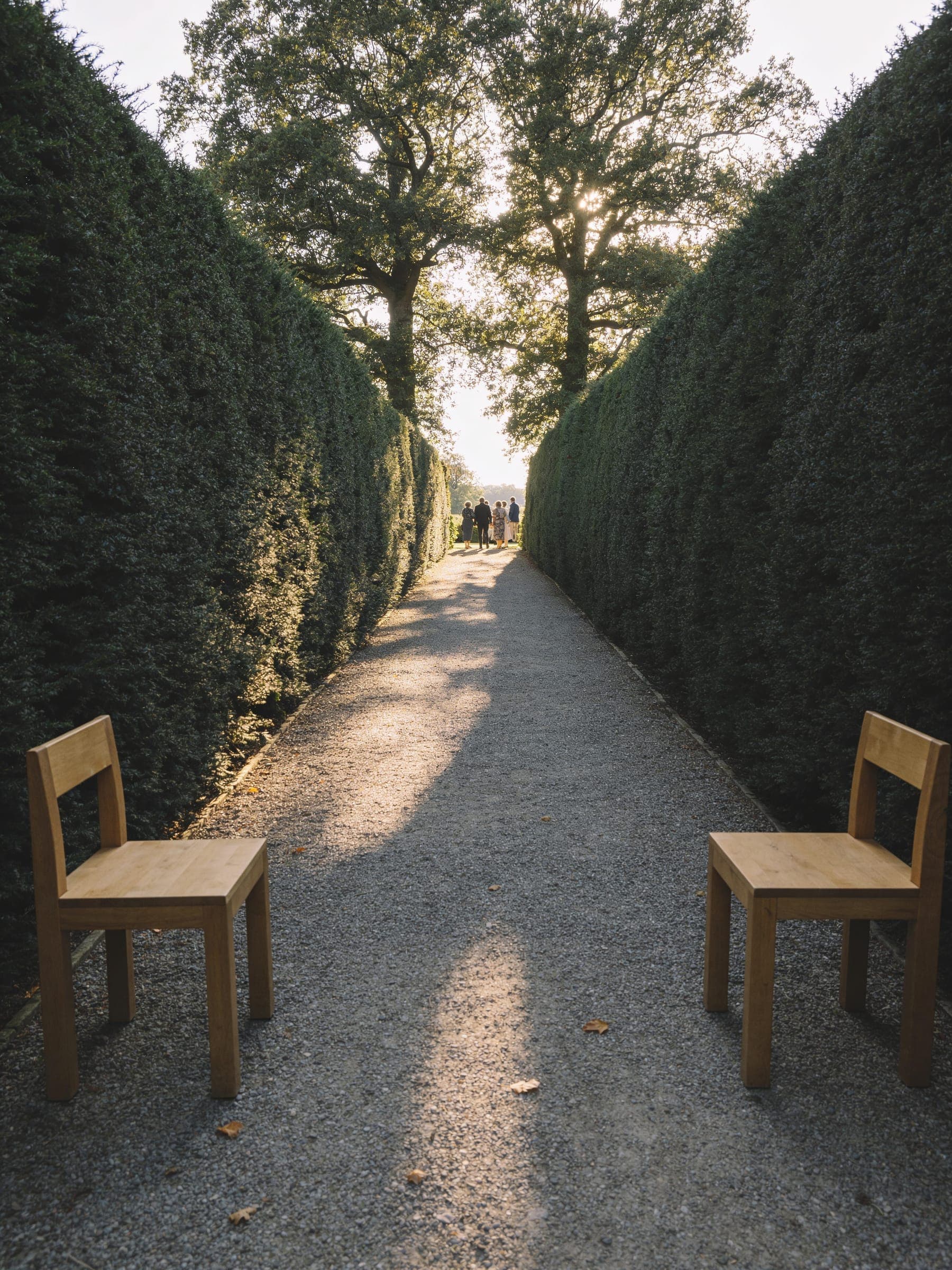
A garden and a courtyard are close relatives. Both are outdoor rooms. The garden is defined by planting and the courtyard by walls, and both are at their best when the wedding treats them as rooms. Used as backdrops for hired decoration, they lose most of what made them worth choosing.
The ideas below start with the layout of the space, because that decides where the ceremony faces and where dinner sits. Flowers and details come after.
Read the room before you set it
Every garden has an axis: a path, an avenue of trees, a line of hedging, a view framed by two walls. A ceremony placed on that axis looks as though it belongs there. A ceremony placed across it, facing a hedge side-on or with a greenhouse half in view, tends to look temporary however carefully it is dressed.
Courtyards usually have one wall or doorway that the eye goes to first. That is often the right place for the ceremony, with guests facing it and the rest of the courtyard behind them.
In a garden, the planting is the decoration. The job is to leave room for it.
The ceremony
Garden ceremonies are often over-furnished. An arch, an aisle runner, lanterns and two large arrangements can crowd a place that already has hedges and trees doing the same work. Choose one focal element or none. A pair of mature trees, an opening in a hedge or a stone bench is already a frame.
Think about the ground. Lawns are soft underfoot for guests but awkward for chair legs and heels, and they are often damp in the morning. Gravel is stable but noisy. Stone is ideal and not always available. A short aisle on firm ground usually works better than a long one across grass.
The sun matters more outdoors than anywhere else. Guests facing into low sun will squint through the vows, and a couple standing in full sun will be photographed with hard shadows. Check the direction of the light at the actual ceremony time. Wedding ceremony ideas built around the setting covers orientation in more detail.
Dinner
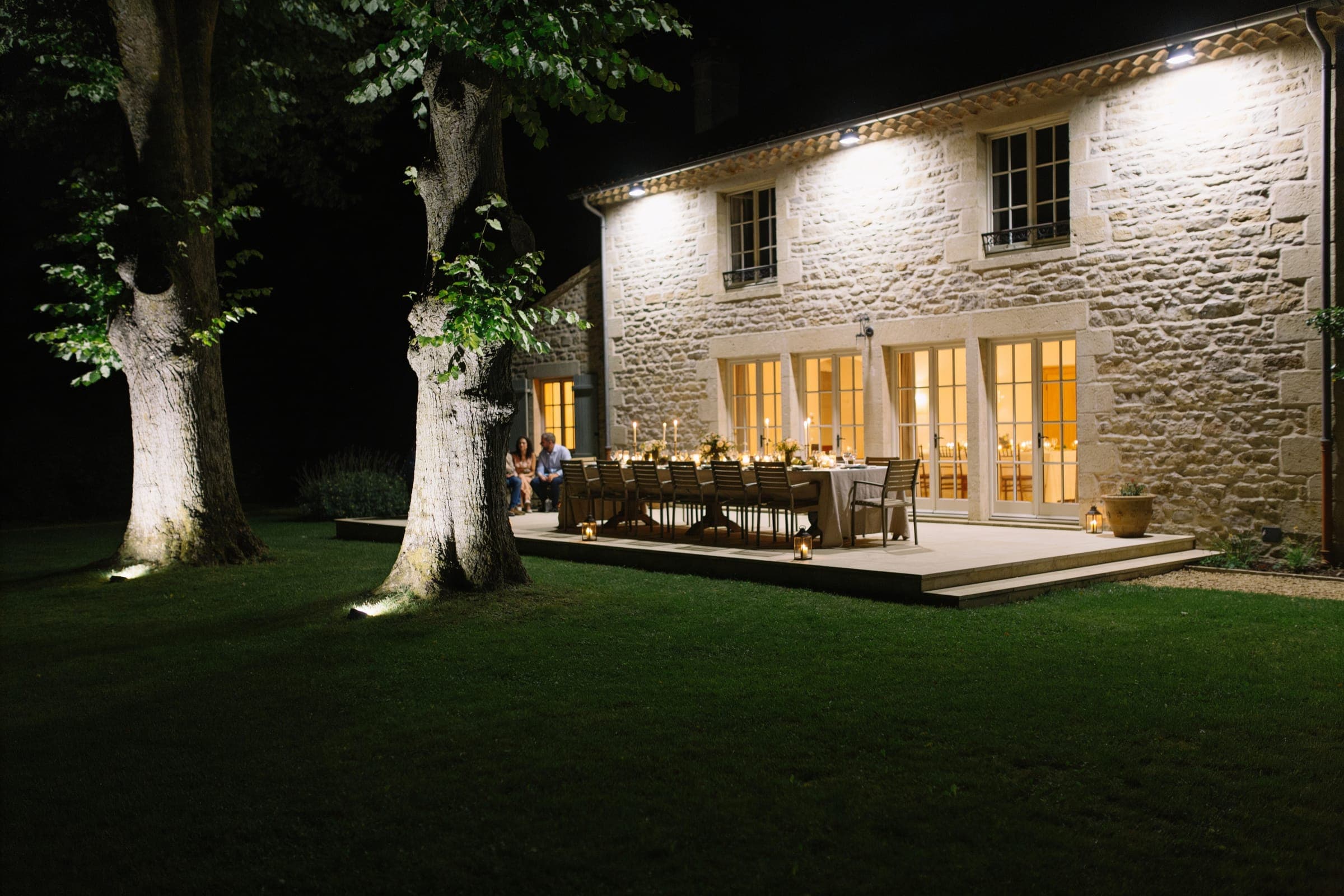
A courtyard is one of the best places for an evening dinner. The walls hold warmth after sunset, contain sound and make a group of any reasonable size feel gathered. A single long table running the length of the space, or two parallel tables, suits the proportions of most courtyards. The case for a long-table wedding dinner explains when that arrangement works best.
Gardens are more open and need more help after dark. Without walls to hold light, candles alone will read as small points in a large darkness. Overhead festoon lighting is the usual answer. Lighting the trees from below, or setting dinner close to the house so the windows contribute, often looks calmer.
Flowers and palette
In a garden, cut flowers are seen against living ones. Arrangements that echo what is growing, in similar colors and looser shapes, look settled. Tightly composed, formal arrangements can look brought in. A courtyard, with its plain walls, can take more contrast: one strong color against pale stone reads clearly.
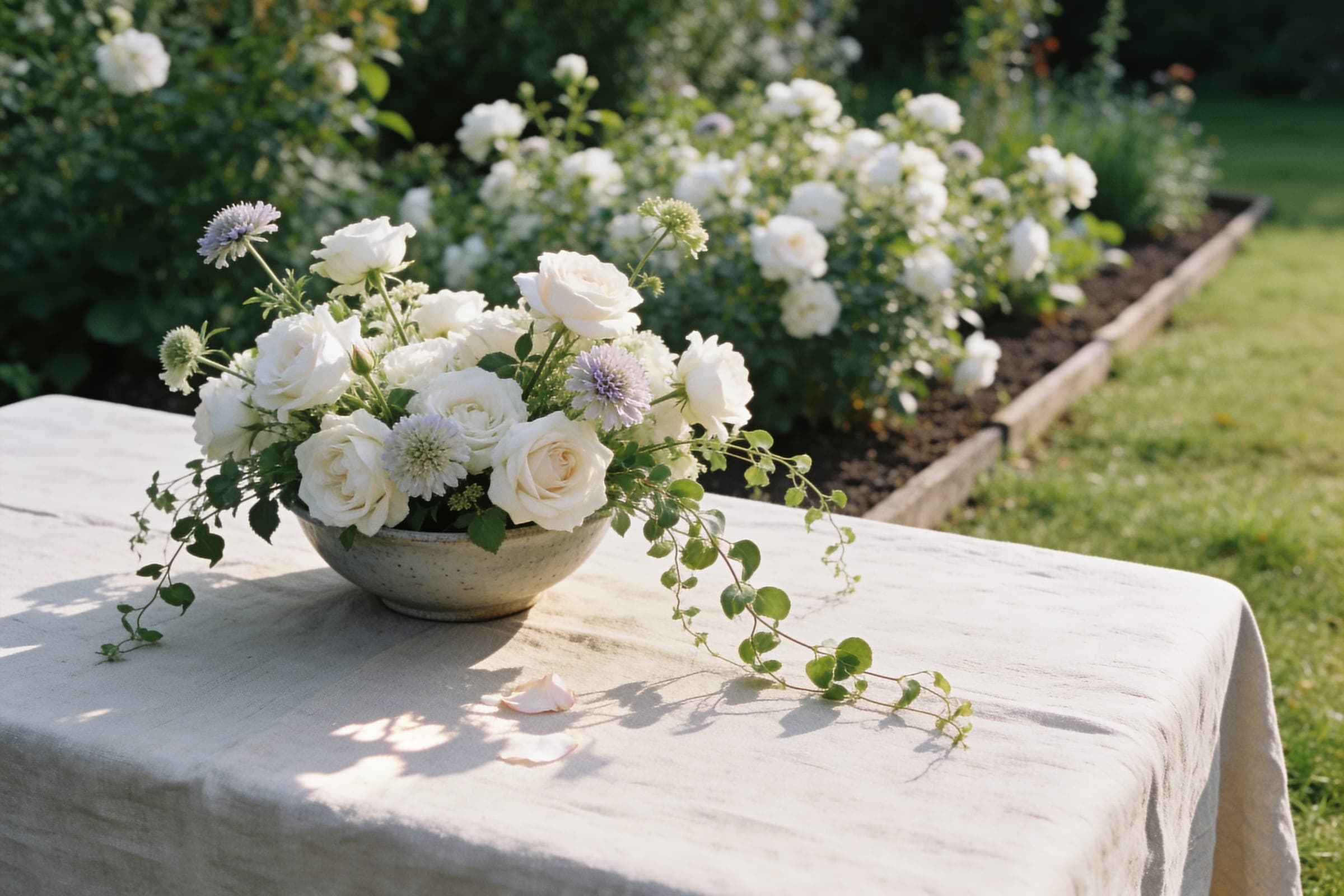
The palette is mostly decided already. Green is the dominant color in any garden, so the question is what sits well against it. Wedding flowers that belong in the setting and choosing a palette from the place both start from this point.
When a garden or courtyard is the wrong choice
Works well when
- The guest list fits the space comfortably with room to move.
- The season gives reliable daylight at the ceremony hour.
- There is an indoor room nearby that you would be happy to use.
Think twice when
- The only covered option is a marquee you have not seen set.
- The garden is at its best in a different month from your date.
- Dinner is the center of the day but the garden has no enclosure or lighting.