
The Edit: Flowers
Wedding Flowers That Belong in the Setting
The best wedding flowers look as though they could have come from the place. How to decide scale, form and placement from the architecture and landscape around them, rather than from a list of varieties.
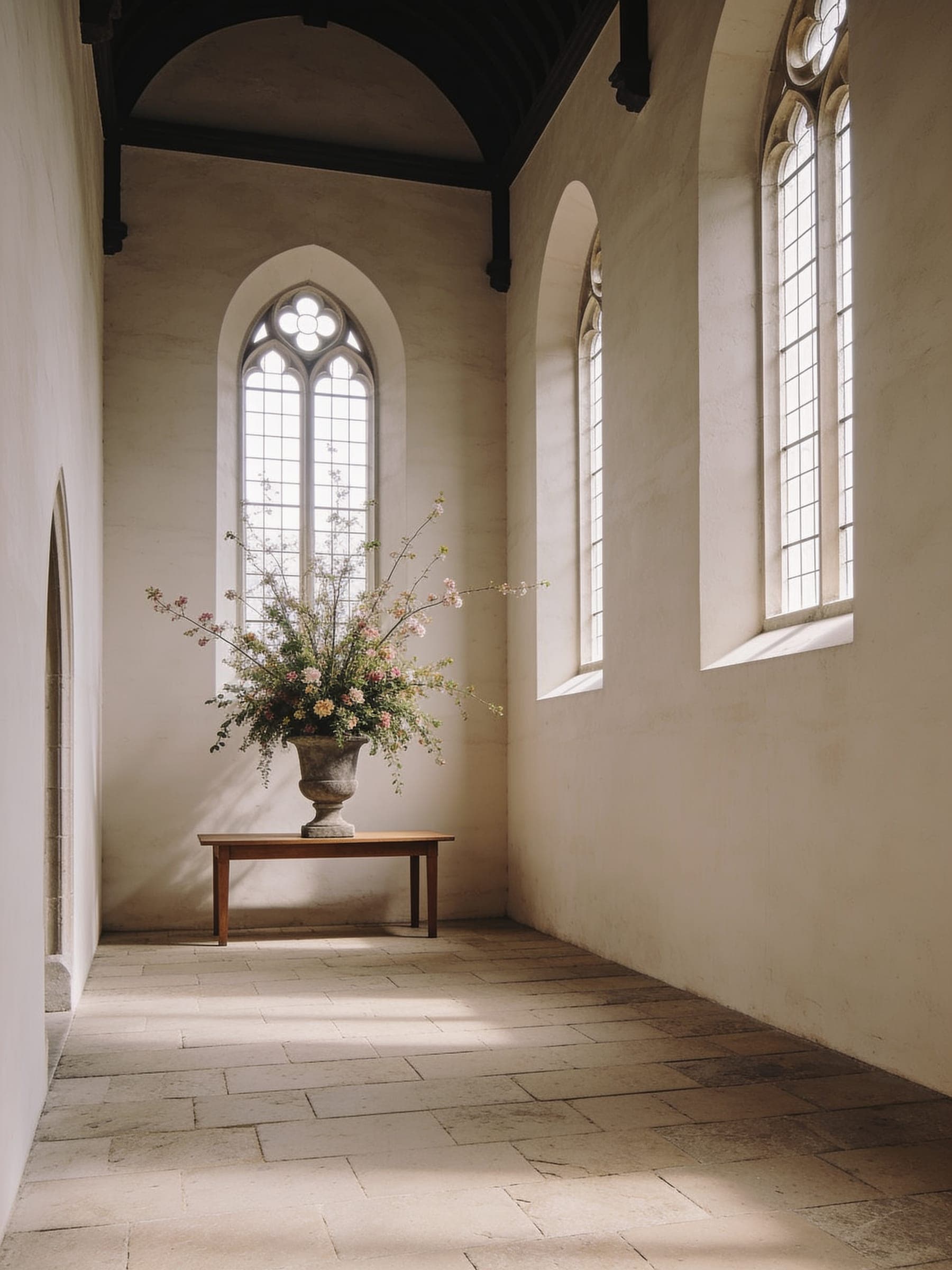
Most flower inspiration starts with varieties and colors. A more useful starting point is the place the flowers will stand in. The same arrangement can look right in one setting and brought-in in another. The difference almost always comes down to scale, form and placement. The variety matters less.
Scale: measure against the architecture
Flowers are seen against what is behind them. In a room with high ceilings and large windows, small arrangements disappear. In a low-beamed room or a small courtyard, a large installation overwhelms the space. Stand in the space and look at the proportions: the height of the doors, the width of the windows, the size of the trees. The flowers should belong to that scale.
Often this means fewer, larger arrangements in big spaces and more, smaller ones in intimate spaces. It rarely means a large number of medium-sized arrangements, which is the common default.
Form: follow what grows there
In a garden, cut flowers are seen alongside living ones. Loose arrangements with foliage and movement, in similar colors to what is growing, look settled. In a formal stone room, a more structured arrangement can sit well against the architecture. On the coast, low, compact forms stand up to wind and stay below the horizon. In the countryside, branches, grasses and seasonal material from the surrounding land connect the table to the fields outside.
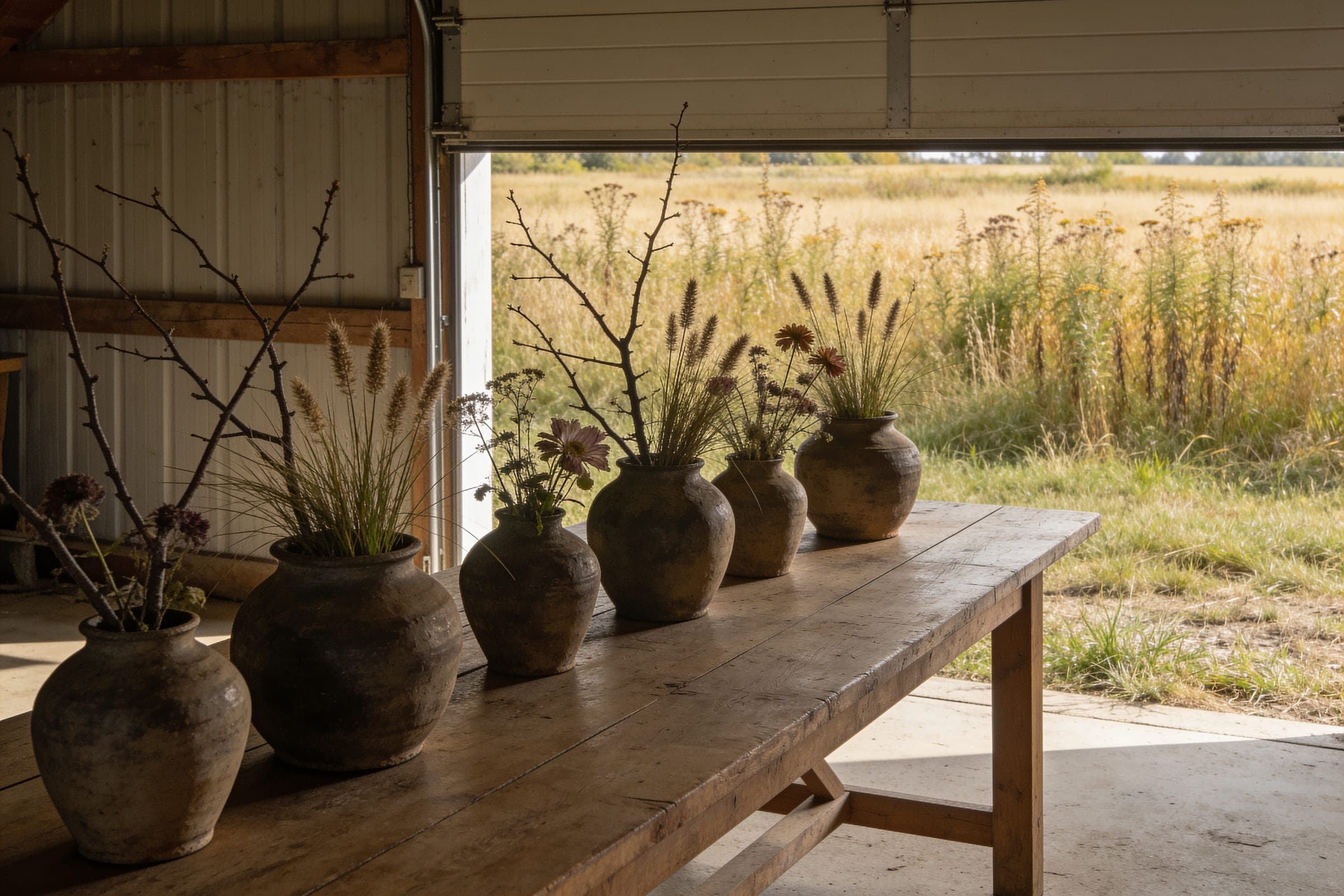
If an arrangement would look strange in the landscape outside the window, it probably looks strange inside too.
Placement: where flowers do the most
Flowers are usually spread evenly: some at the ceremony, some on each table, some at the entrance. Concentrating them works better. Decide which one or two places matter most and put most of the flowers there.
- The ceremony. Where the setting lacks a focal point, flowers can create one. Where it has one, ground arrangements at either side frame it without blocking it. See ceremony ideas built around the setting.
- The table. Low, so guests can see across. A continuous line on a long table, or grouped small vessels. See wedding tablescapes.
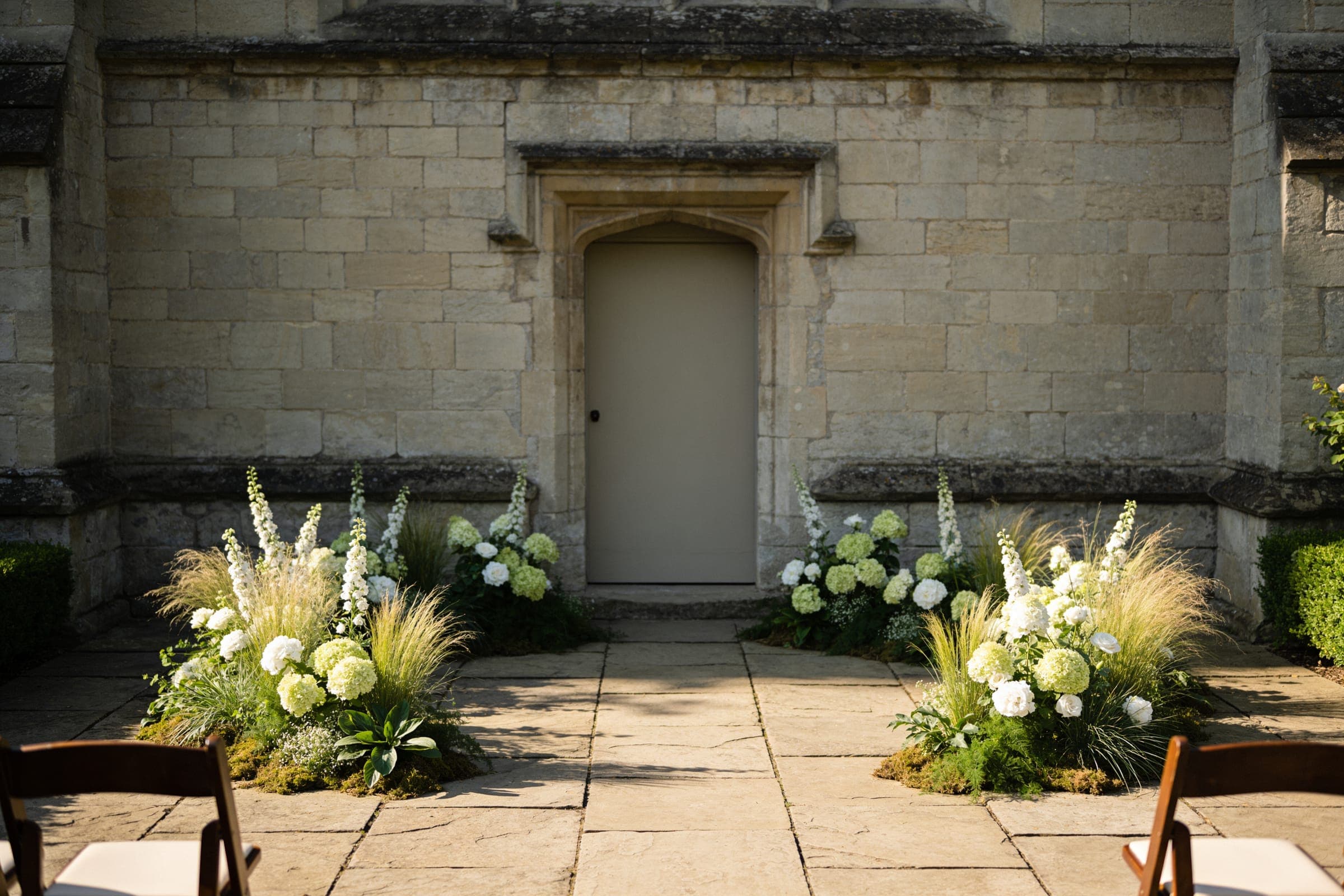
- Ground florals. Arrangements placed on the ground, at the base of a wall, a column or a tree, look as though they grew there. They suit gardens, courtyards and stone buildings, and they leave eye level clear.
Flowers that last the day
Wedding flowers are often set out hours before guests arrive and are expected to look fresh until late in the evening. In a warm glasshouse or on a sunny terrace, delicate varieties can wilt well before dinner. Outdoors, wind dries them out. Sturdier flowers, foliage and branches hold up better, and arrangements in water outlast those in foam or tied to structures.
It is also worth deciding which arrangements can move. Ceremony flowers at the ends of rows or on the ground can be carried to the dinner table or the bar once the ceremony is over. That halves the number of arrangements and puts the flowers where guests will spend the most time. Agree the move with the florist and the venue in advance, so someone is responsible for it.
Color against the place
The walls, stone, timber and landscape are already a color. Flowers either sit within that palette or provide contrast against it. Both work. Deciding which one you want before choosing varieties prevents the most common problem, a scheme chosen in isolation that fights the setting. Wedding color palettes starts from the same principle.
Settings, briefly
Garden
- What tends to belong
- Loose forms that echo the planting. Few flowers where the garden is in bloom.
Villa
- What tends to belong
- Arrangements scaled to terraces and tall rooms. Local flowers and foliage.
Vineyard
- What tends to belong
- Branches, grasses and seasonal material from the land around it.
Coast
- What tends to belong
- Compact, low arrangements in heavy vessels that can stand up to wind.
Mountain
- What tends to belong
- Hardy, simple forms. Little that wilts quickly in sun or cold air.
For more on the settings themselves, see the garden and courtyard edit and the greenhouse edit.