
Places: Venue types
Wedding Venue Types: Which Setting Suits Your Celebration?
A villa, a garden, a glasshouse and a barn each change the shape of the day: where people gather, how dinner is lit, what needs to be hired. Here is what each setting gives, and what it asks of you in return.
Venue categories are usually presented as styles to choose between, as though the only difference were the look. The more useful difference is practical. Each type of setting has a default way of hosting people, and a wedding goes more smoothly when it follows that default than when it works against it.
Read the entries below for the trade-offs. Most couples already know which picture they like. The question is which setting will still work for their guest count, season and the kind of evening they want.
Seven settings compared
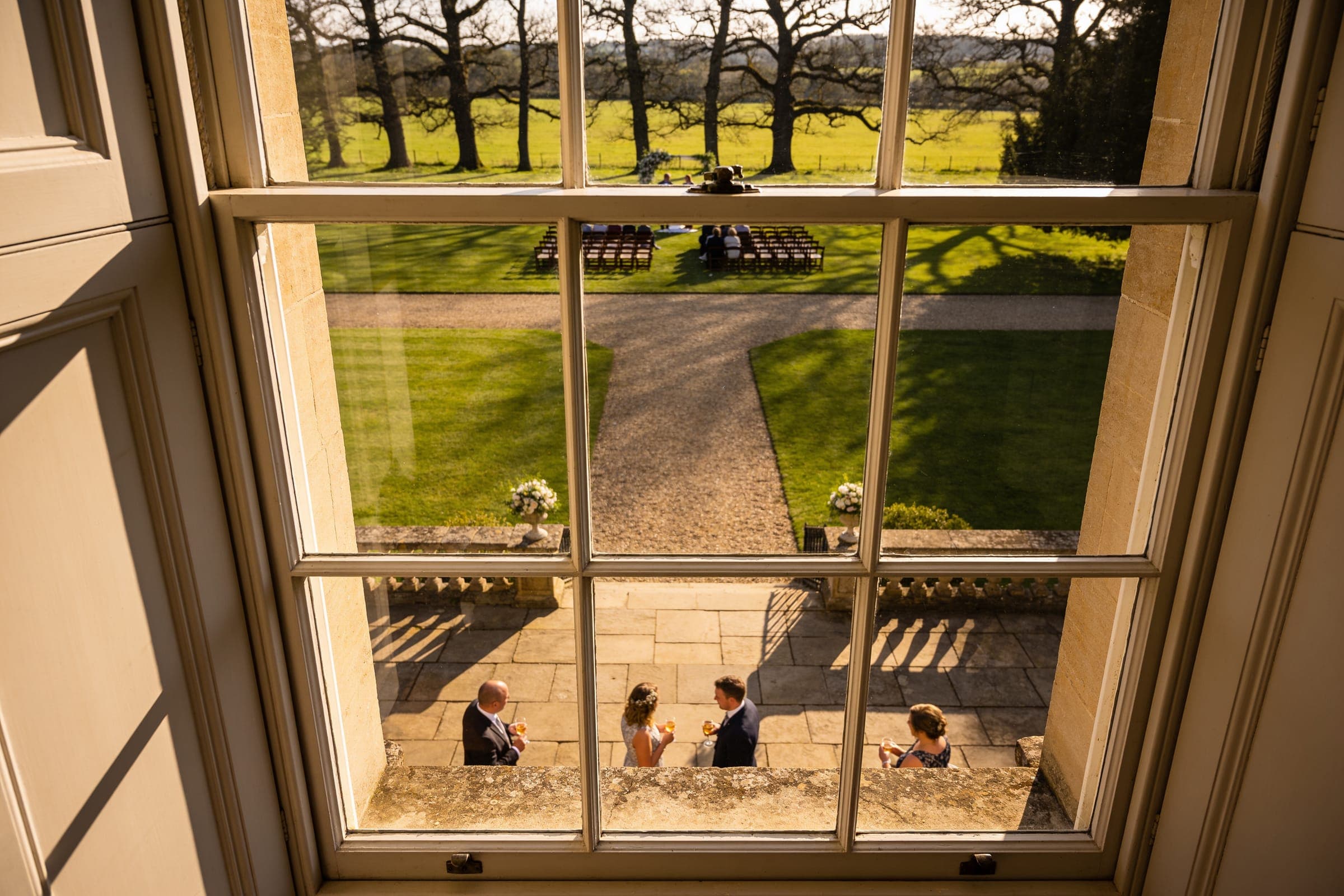
Villa
- What it gives
- Several rooms and terraces at domestic scale, so the day can move from space to space. Often somewhere for guests to stay.
- What it asks of you
- Rooms that may be too small for everyone to sit together indoors. Outdoor dinner then depends on weather and cover.
- Tends to suit
- Smaller guest lists, and weddings that run across more than one day.
Estate
- What it gives
- Grounds, a principal building and usually several distinct spaces, which makes a sequence of scenes easy.
- What it asks of you
- Distance. Walks between spaces need lighting, signage and time built into the schedule.
- Tends to suit
- Larger weddings that want a ceremony, drinks and dinner in clearly different places.
Garden
- What it gives
- Planting that is already there: hedges, trees and borders that give structure without hired decoration.
- What it asks of you
- A full plan for weather and for dusk. A garden is a daytime room unless it is lit.
- Tends to suit
- Daytime ceremonies and long lunches in the warmer months.
Courtyard
- What it gives
- Enclosure. Walls hold sound and warmth and make a group feel gathered.
- What it asks of you
- Careful numbers: a courtyard is pleasant at the right size and cramped just above it.
- Tends to suit
- Dinner after sunset, and weddings where intimacy matters more than a view.
Glasshouse
- What it gives
- Plants and architecture inside one structure, with daylight during the day and reflections after dark.
- What it asks of you
- Temperature control. Glass gathers heat in sun and loses it at night.
- Tends to suit
- Ceremony and dinner in one place, in spring or autumn light.
Coastal
- What it gives
- Horizon, open sky and a clear orientation for the ceremony.
- What it asks of you
- Wind, glare and exposure. Candles, florals and sound all behave differently near open water.
- Tends to suit
- Couples who want the landscape to do most of the work.
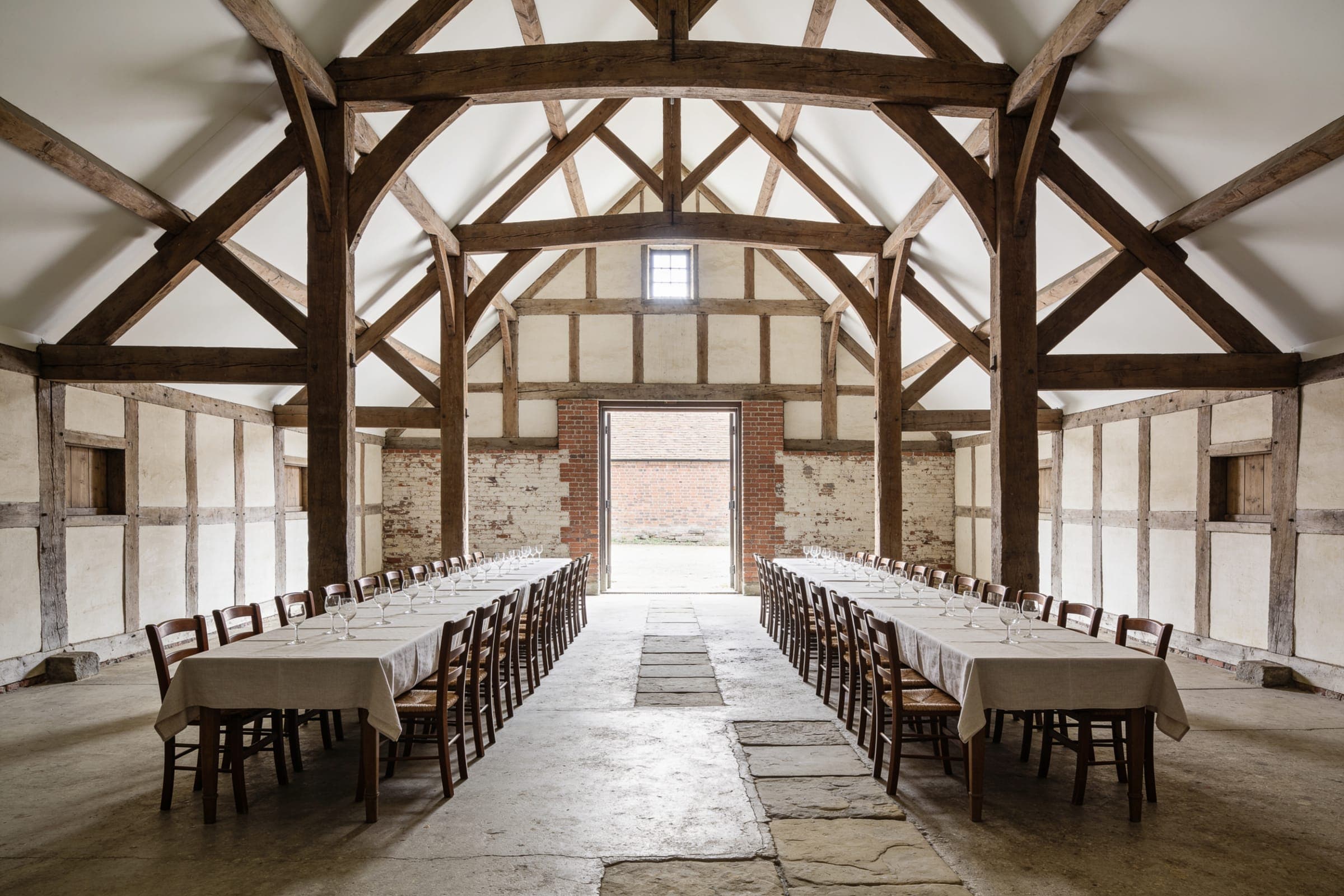
Barn and countryside
- What it gives
- Height, timber and patina, and a single large room that can hold everyone.
- What it asks of you
- More hiring: kitchens, heating, lighting and toilets are sometimes minimal or absent.
- Tends to suit
- Long-table dinners, larger guest lists and weddings that want a relaxed evening.
Three questions that narrow the list
Will everyone sit down together indoors if they have to?
This single question separates settings more quickly than any aesthetic preference. A villa or courtyard wedding that depends on an outdoor dinner needs a covered alternative that holds the whole group. A barn or estate usually has it built in.
Should the day stay in one place or move?
A glasshouse or barn can host everything under one roof, which is simple for guests and suppliers. An estate or villa suits a day that moves, with a change of scene between the ceremony, drinks and dinner. Neither is better. They produce a different pace. Wedding ceremony ideas built around the setting looks at how the ceremony uses each space.
How much does the place already do?
A garden in full growth or a coastline needs little added. A barn or an empty glasshouse needs more thought about light and furniture. Neither is a problem, but it changes where the effort goes.
Settings in more depth
Four of these settings have their own edit: garden and courtyard weddings, coastal weddings, greenhouse weddings and vineyard and countryside weddings. Each looks at how the ceremony, dinner and details can follow from the place. For the decision itself, including scale, flow and light, see what actually matters when choosing a wedding venue.