
The Edit: Vineyards & countryside
Vineyard & Countryside Weddings
Rows of vines, open fields, old barns and outbuildings: rural settings bring landscape and patina that no room can supply. What they contribute, and how the dinner and season should follow from them.
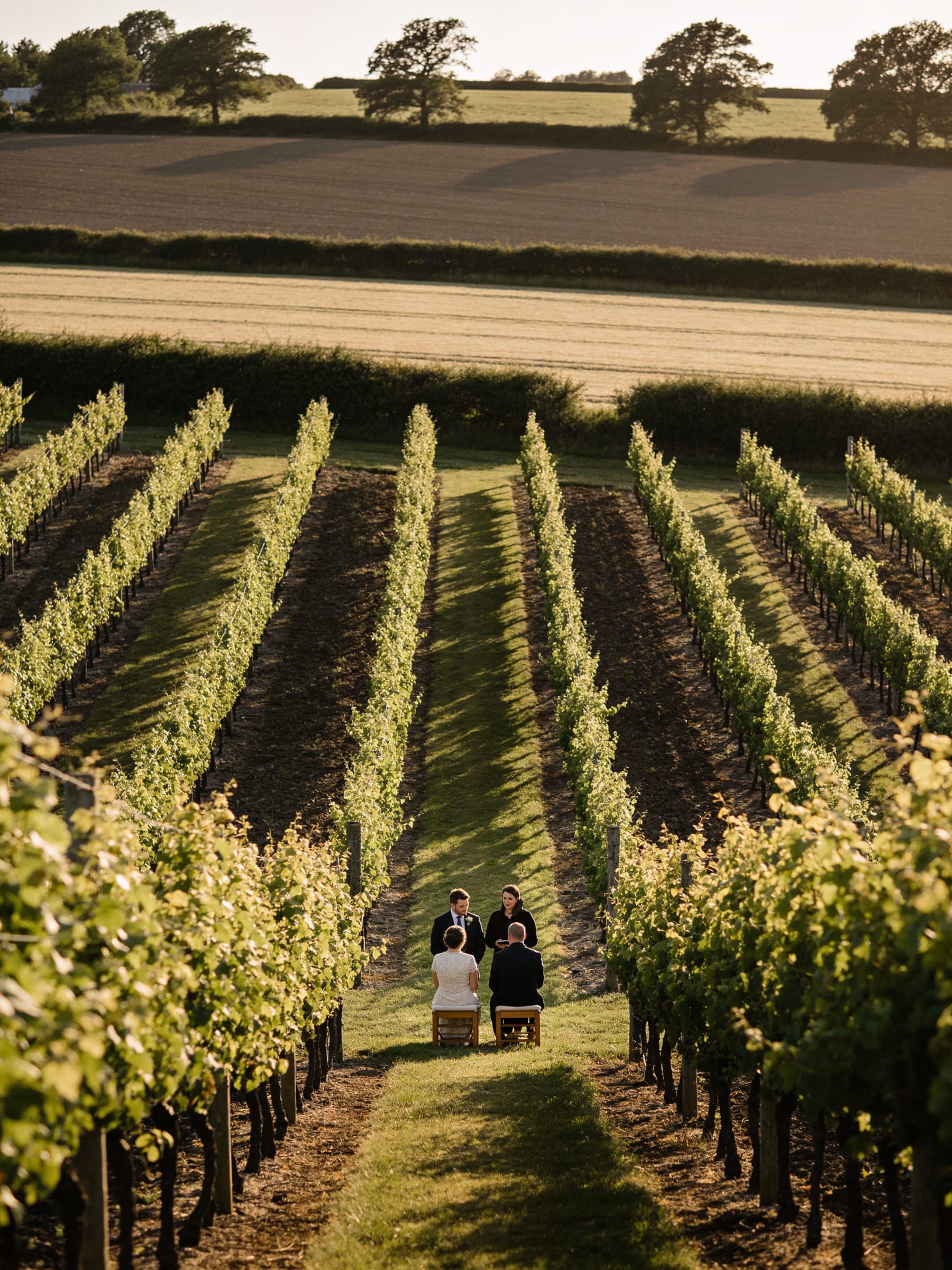
A rural setting gives a wedding two things: long views and old materials. Fields, vines and hedgerows run to the horizon. Barns, farmhouses and working buildings bring timber, brick, stone and the marks of use. Both are hard to create and easy to cover up.
The planning question is how to keep them visible while still giving guests shelter, light and a comfortable evening.
What the landscape contributes
Planted land has order. Vines are set in straight rows, fields have edges, orchards have regular spacing. That order is useful. A ceremony at the end of a row of vines, or on the edge of a field with the land falling away behind it, has a structure that no hired arch can match.
A vineyard is also a working place. Its appearance changes through the year, and the busiest period of work there may fall at the time you would choose for a wedding. Ask the venue what the land looks like in your month and what will be happening around it.
In the countryside, the most distinctive thing is usually the view. Seat people so they can see it.
Patina, and what not to cover
Old buildings carry their history on the surface: worn stone, silvered timber, lime-washed walls, uneven floors. These are qualities to keep in view. Draping a barn in white fabric turns it into a generic marquee. Hanging greenery over every beam hides the structure guests came to see.
The practical challenge is that rural buildings often need additions to function: lighting, heating, a kitchen, toilets. Choose these so they sit quietly. Warm, low lighting on the walls rather than bright overhead fittings, and furniture in wood or linen, keep the building in charge.
A ceremony in the open
Open land has no walls to tell guests where to look, so the ceremony needs a clear direction. Face it toward the longest view, with the light behind the guests or to one side. Countryside ground is rarely level: a short walk to find a flat, firm spot for chairs saves a lot of discomfort on the day.
Distance from the buildings matters. A ceremony far out in a field is striking, but guests then need a lit, walkable route back for drinks and dinner, and any cover in case of rain has to be close enough to reach quickly. Wedding ceremony ideas built around the setting compares orientation and focal points in different places.
Dinner at one table
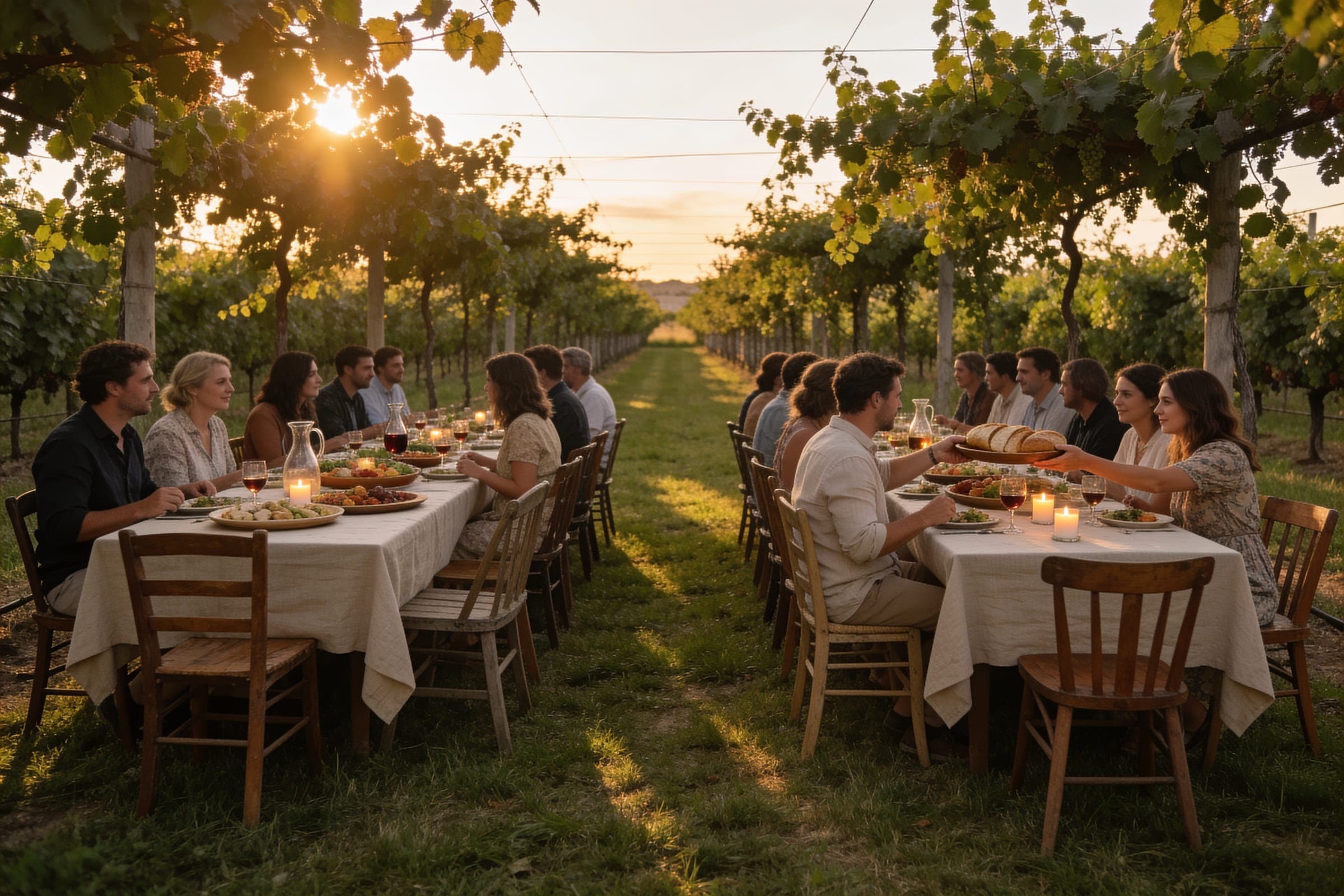
Rural settings suit long tables. A barn is a long room, and so is a row between vines. Seating guests along one or two long tables echoes the shape of the place and makes dinner feel like a shared meal. The case for a long-table wedding dinner sets out when this works and when it becomes impractical.
Serving style matters too. Sharing platters passed along the table suit this kind of dinner well, but they need space on the table and a catering team used to the format. Decide the service before the table decor, because it decides how much room is left for candles and flowers. Wedding tablescapes covers that balance.
Season matters more here
Countryside weddings are more exposed to the season than almost any other. The color of the fields, the state of the vines, the length of the evening and the temperature after dark all change month to month. Late summer and early autumn bring long evenings, fuller fields and warmer colors. A spring wedding has fresher green and cooler nights. The right choice depends on what you want the land to look like.
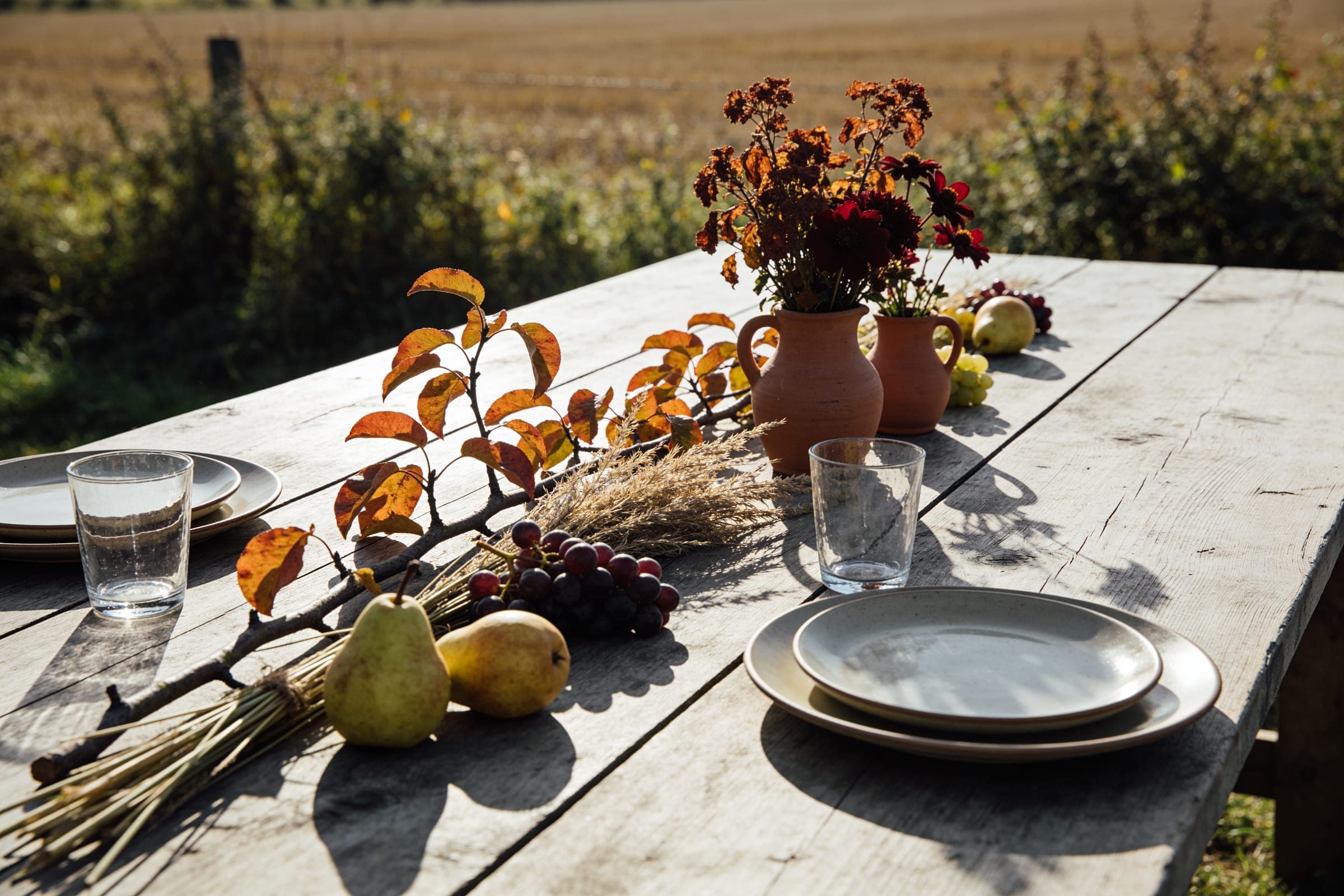
Autumn details follow naturally from the setting: branches, fruit, grasses and late flowers from the surrounding land. Wedding ideas by season compares what each season changes, and a palette taken from the place shows how to follow the land's color.
How the evening ends
Rural venues are usually further from where guests sleep. Unlit lanes, few taxis and long drives decide how the night finishes, often more than the music does. Settle early how guests arrive and leave: shared transport, rooms on site or nearby, or an end time that suits the last ride home.