
Places: Choosing a venue
What Actually Matters When Choosing a Wedding Venue
A venue decides how guests arrive, where the ceremony faces, how dinner is lit and how the evening ends. This guide separates the qualities that shape the day from the ones that only photograph well.
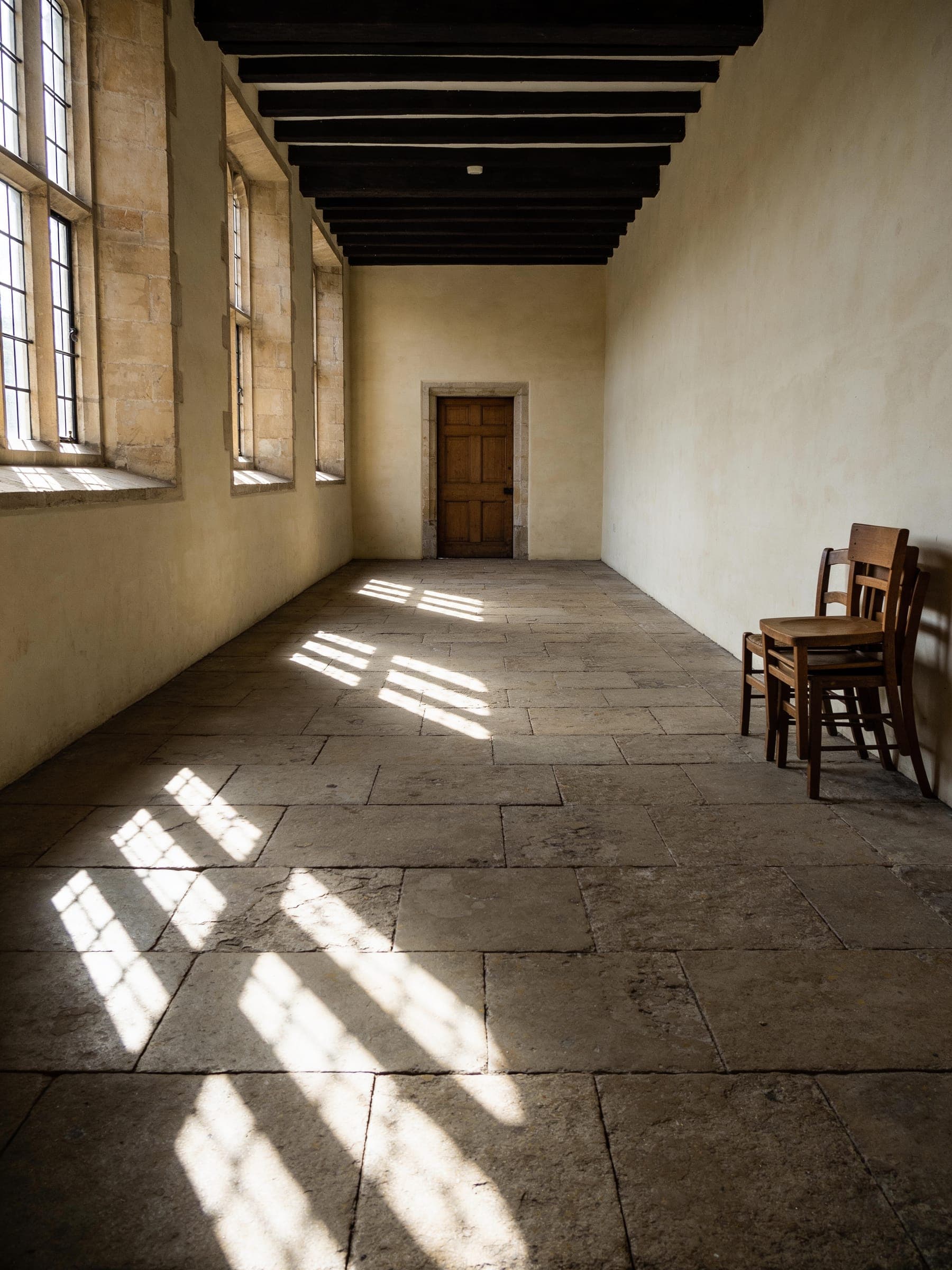
Most shortlists are built from photographs. Photographs are good at showing a room from its best angle, in its best light, set for somebody else's wedding. They rarely show what a couple needs to know: where guests stand while the ceremony space is turned into dinner, how far the ceremony is from the tables, and what the place looks like once the sun has gone.
The questions below are ordered by how much they change the day. Scale and flow come first, because no amount of styling repairs them. Light and character come next. Aesthetic fit comes last. A place that works well usually needs less dressing to look right, so fit tends to follow from the earlier answers.
Scale: a room should fit the guest list
A venue's stated capacity is the most people it can hold. It says little about the number it holds well. Near the limit, a room feels busy before anyone has danced. Far below it, tables drift apart, conversation thins out and the room starts to look unfinished.
Ask the venue how they would set the room for your number, and ask to see photographs or a floor plan from an event close to that size. If most of their weddings are twice as large as yours, the space may need to be divided, screened or furnished differently. For guest lists at the smaller end, the guide to a small wedding covers how to choose a place scaled to the group, instead of a large room partly used.
A space that works comfortably for 60 guests is still the wrong venue for 90.
Flow: how the day moves through the place
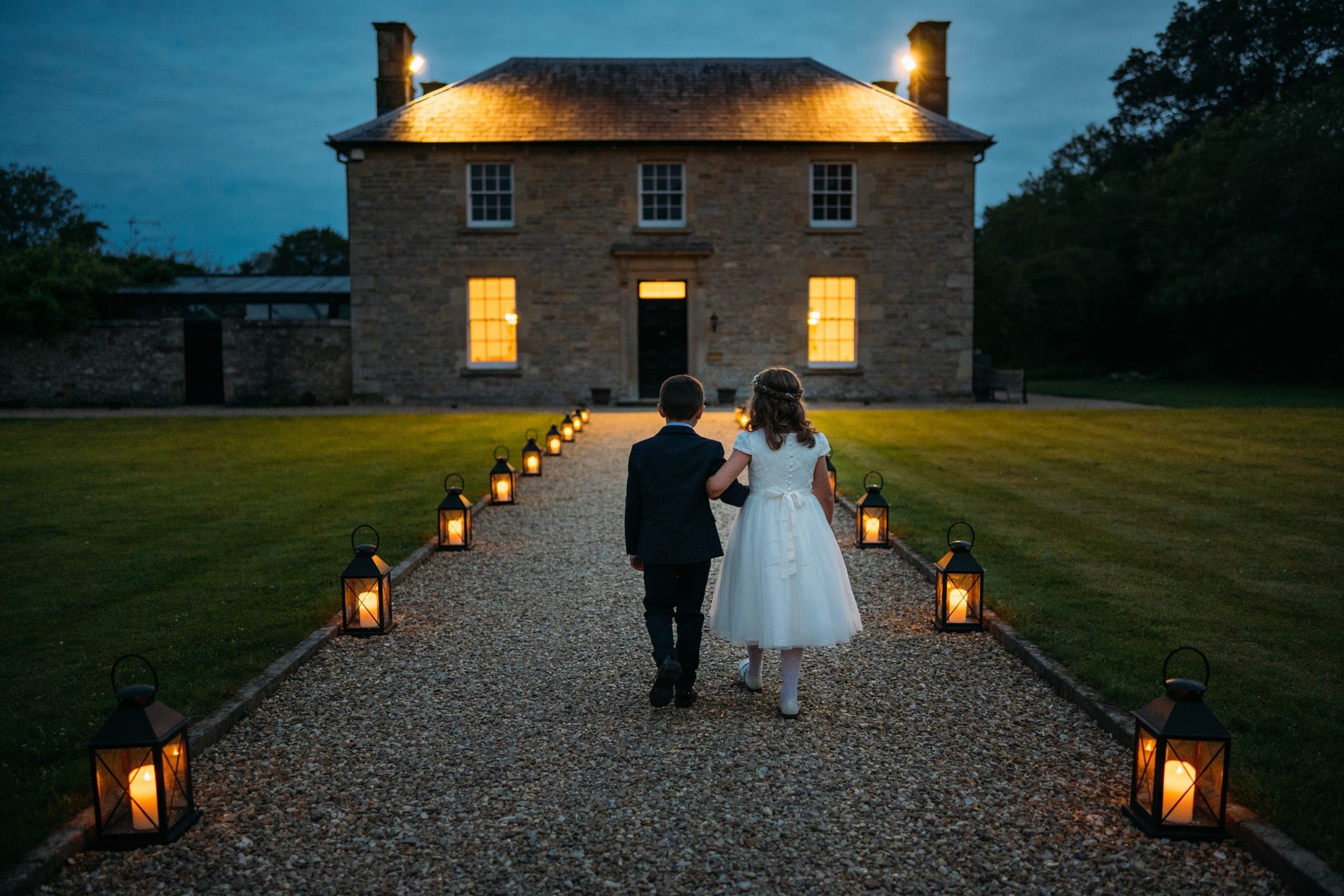
A wedding is a sequence of spaces: arrival, ceremony, drinks, dinner, and whatever happens after dinner. Each change of scene needs somewhere to happen. Walk the route a guest would walk, in order, and notice where it stalls.
- Arrival. Where do guests first stand, and is it clear where to go? A long approach can be part of the experience, as long as it is lit and walkable in the shoes people will wear.
- The turnaround. If the ceremony and dinner share a room, guests need a second space, ideally with drinks and shade or shelter, while the room is reset.
- Distances. Steps, gravel, slopes and long lawns matter to older guests and anyone with limited mobility. Ask the venue exactly what is step-free.
- The late evening. Where does music happen, and how close is it to anyone sleeping on site or nearby? Many venues have fixed rules on this.
How the dinner room itself should be arranged is its own question, covered in how a reception room should work.
Light at the hours that matter
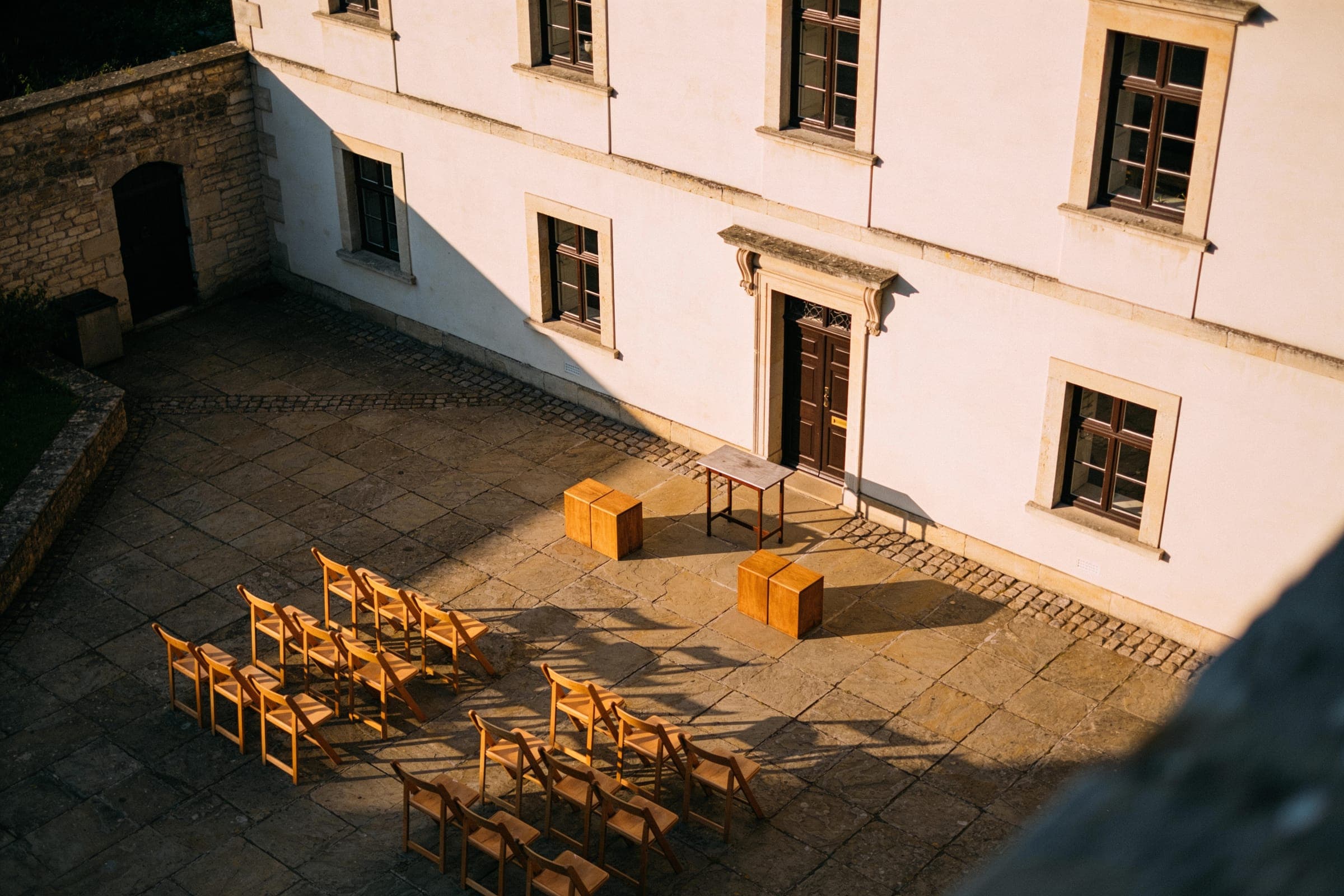
Visit at the time of day your ceremony will happen, and if possible in the same season. A terrace that is pleasant at eleven in the morning can be in hard, flat sun at four in the afternoon. A courtyard that is bright at noon can fall into shade well before the ceremony starts.
Then ask what the room looks like after dark. Some spaces depend on overhead fittings that make a dinner feel like a function. Others have wall lights, dimmers or enough architecture to hold candlelight. If the evening matters to you, the case for a candlelit reception explains what a room needs for low light to work.
Character: what the place gives without being asked
Separate what belongs to the building from what belongs to the last wedding. Stone walls, old floors, mature trees, a view, the proportions of a room and the size of its windows stay with you. Draping, flower installations and hired furniture leave with someone else.
The more character is built in, the less you need to add. That is the practical argument for choosing the setting first: the budget and attention that would have gone into disguising a room can go into the table, the food and the evening. Building a wedding style around the venue takes this idea through every later decision.
The wet-weather plan is part of the venue
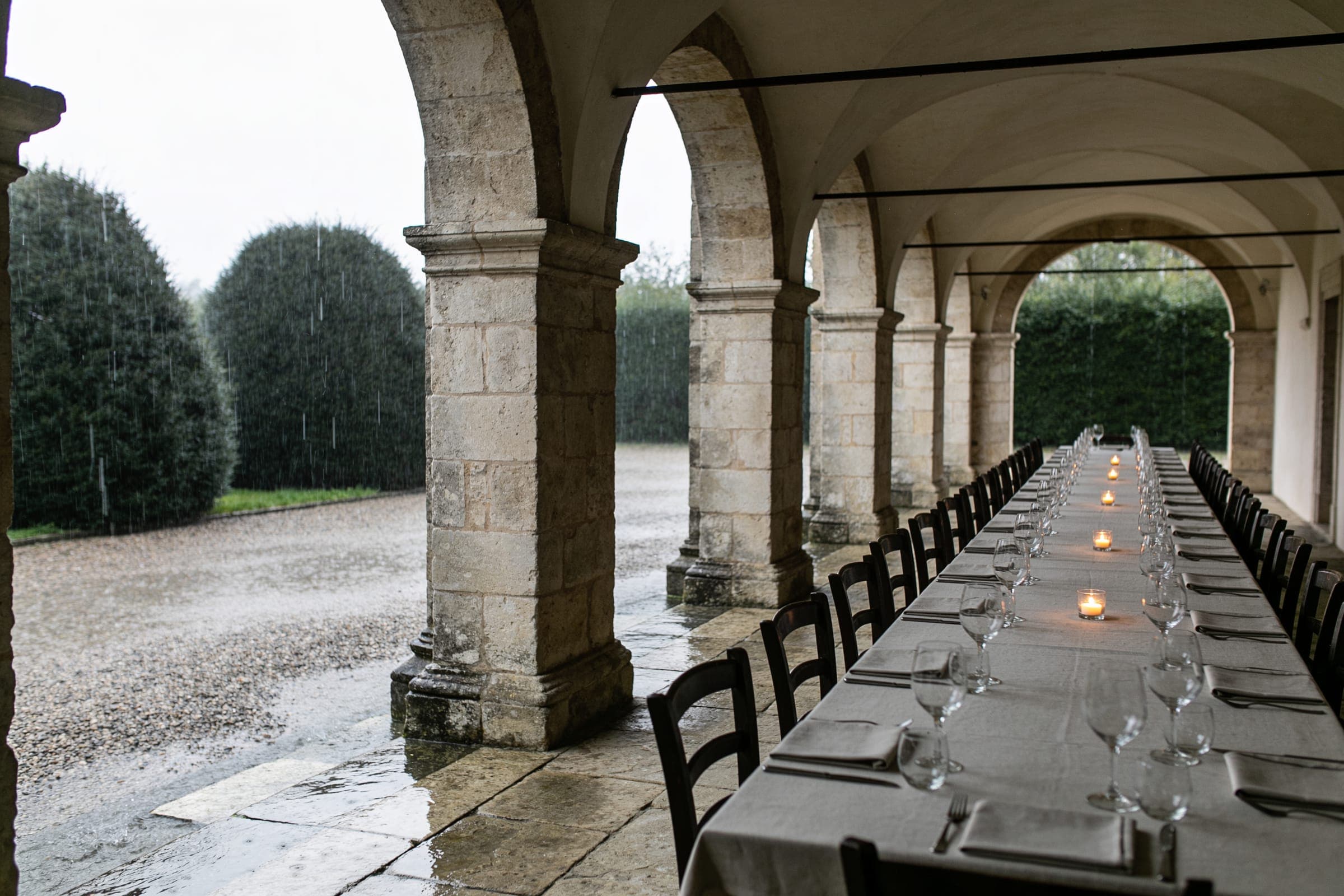
For any outdoor part of the day, the alternative space is something you are booking, not a footnote. Ask to see it set for a wedding, and judge it as though it were your first choice. If the covered option is a room you would never have chosen, you are partly choosing that room.
What to settle before you visit
Visits are more useful when a few decisions are already made. In roughly this order:
- A realistic guest-count range. It rules out more venues than any other single answer.
- The season, because it decides the light, the likely weather and whether outdoor space is usable.
- Whether the ceremony happens on site, and whether it will be civil, religious or symbolic, since this can restrict where it can legally take place.
- What the center of the day is. A long dinner, a dance floor and a ceremony with a view ask different things of a place.
- How much you want the setting to do. Some couples want a finished room. Others want a blank space to build in.
If the kind of setting is still open, the comparison of wedding venue types sets out what a villa, a garden, a glasshouse or a barn changes about the day.
What matters less than it seems
A single statement feature, such as a staircase or a chandelier, is often photographed far more than it is experienced. Long lists of amenities rarely change how a day feels. And a venue's styled shoot shows what a stylist could do there, not what the place is like set simply. Judge the empty room.