
Plan: Wedding style
How to Build a Wedding Style Around the Venue
A board of saved images is a collection of separate ideas. A wedding needs decisions that make sense together. How to use the venue as the organizing idea, and move from inspiration to choices that agree with each other.
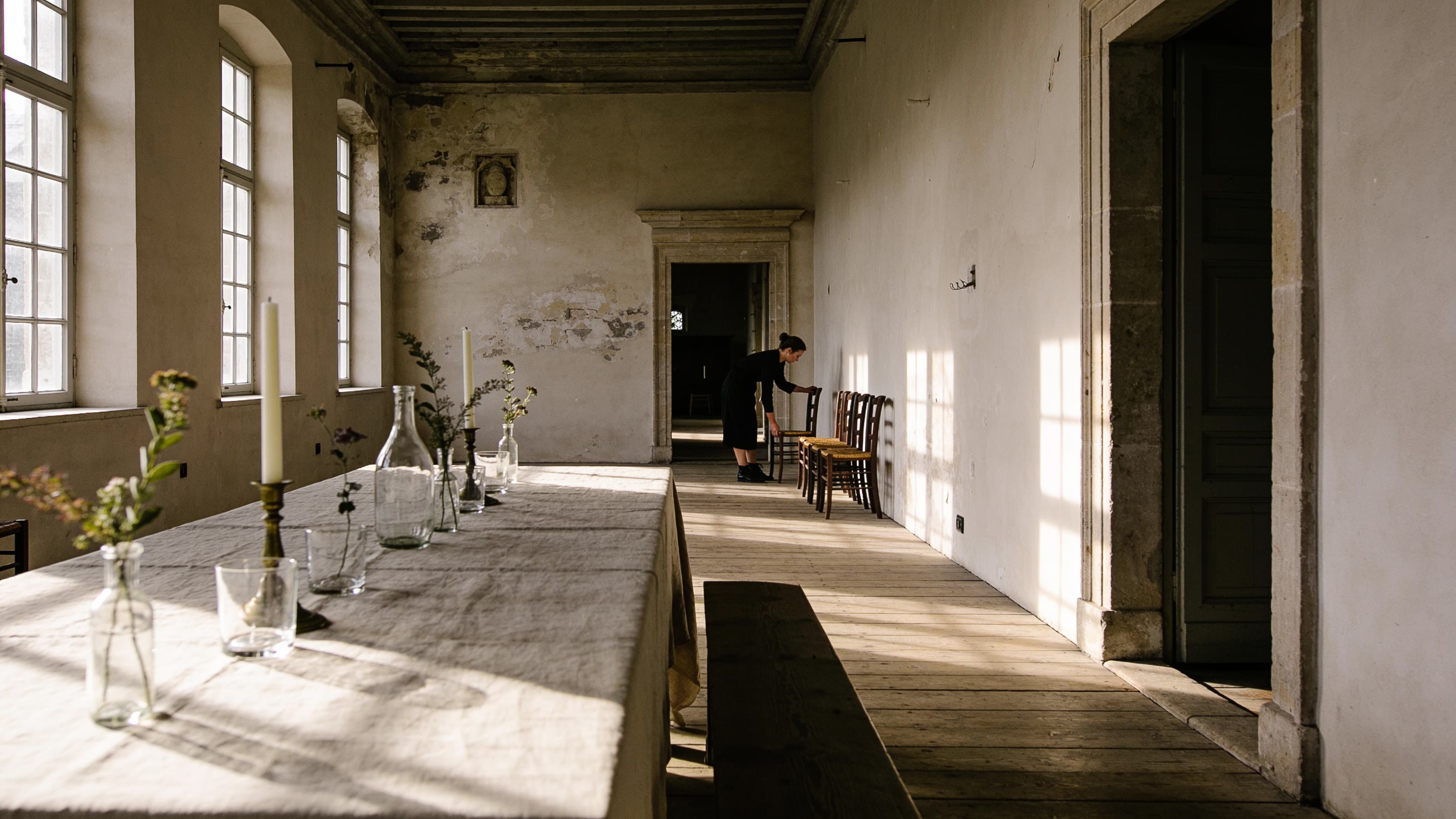
Most couples begin with saved images: a table from one wedding, flowers from another, a dress, a palette, a room. Each image is appealing on its own. Put together, they often point in different directions, and a wedding planned from them can look like a sequence of separate good ideas.
The venue is the most reliable way out of this. It is the one decision that affects every other one, and it has a character that cannot be changed. Using it as the organizing idea gives every later choice something to agree with.
Describe the place in a sentence
Before choosing anything else, describe the venue as precisely as you can, in plain words. Not "romantic" or "rustic", which could mean anything. Something like: a limestone courtyard with an old fig tree, warm in the evening, with a long room opening off it. Or: a glasshouse at the end of a walled garden, full of green, cool in the morning light.
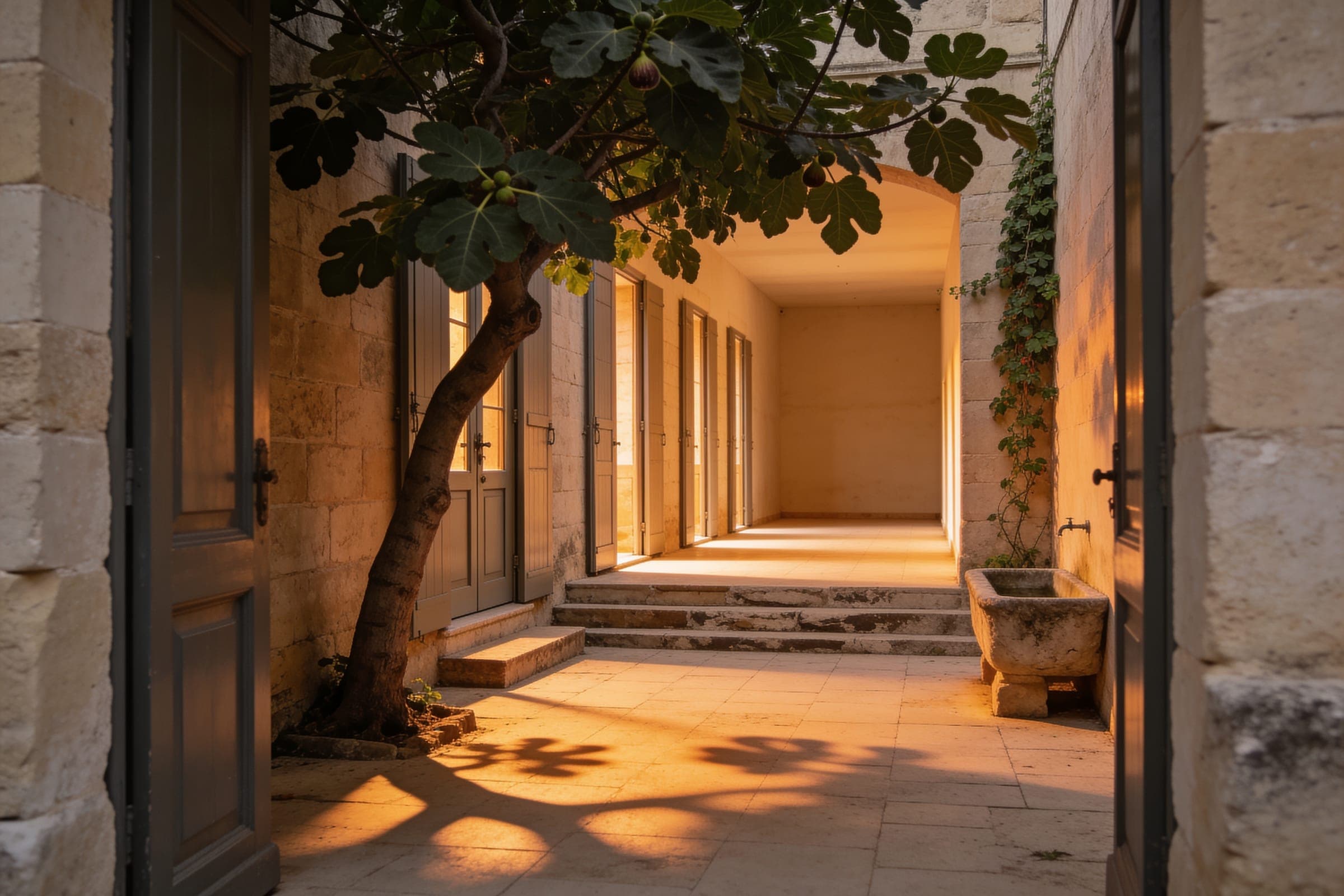
That sentence becomes the brief. Every later decision can be tested against it.
Decide what the setting already gives you before adding another layer.
Sort your saved images
Go back to the images you have collected and sort them against the description. Some will fit it: the materials, light and scale are close to your venue's. Some will clearly belong to a different kind of place. A few will contain one idea that could transfer, like a way of arranging flowers or a type of candleholder, even though the rest of the picture does not fit.
- Keep. Images whose setting resembles yours.
- Extract. Images with one transferable idea. Note the idea, and let the image go.
- Let go. Images that belong to a different place, however much you like them.
This is usually the step where a wedding's direction becomes clear.
Decide in the order of the day
With the setting described and the images sorted, make the main decisions in the order guests experience them. Each builds on the one before.
- The ceremony. Where it happens and what guests look at. Ceremony ideas built around the setting.
- The dinner. Table arrangement and light. How a reception room should work.
- The palette. Taken from the venue's materials and season. Wedding color palettes.
- The table and flowers. Scaled to the room, in the palette. Wedding tablescapes.
- The details. Stationery and small objects that repeat the venue's materials. The details that make a wedding feel cohesive.
The method, followed through once
Take a hypothetical venue: a stone gallery with tall windows along one side, pale plaster walls and a worn stone floor, with low afternoon sun in the room from four o'clock.
- Ceremony. At the far end of the gallery, with guests facing the length of the room so the windows light the couple from the side.
- Dinner. One long table under the windows, following the shape of the room, laid while guests have drinks outside.
- Palette. Taken from the plaster and stone: warm off-white and gray, with one deeper accent such as rust or olive.
- Table and flowers. Plain linen close to the color of the walls, clear glass, low loose flowers. The sunlight and later the candles do the rest.
- Details. Heavy, textured paper for the stationery, echoing the stone. Nothing that needs a theme to explain it.
None of these choices is unusual. They agree with each other because each one started from the same room.
Test every choice
For each new decision, ask whether it agrees with the description of the place. A heavy velvet runner in a light garden setting does not. A coastal wedding with forest-green stationery might, if there is a reason. The question is whether it belongs. Plenty of beautiful things do not.
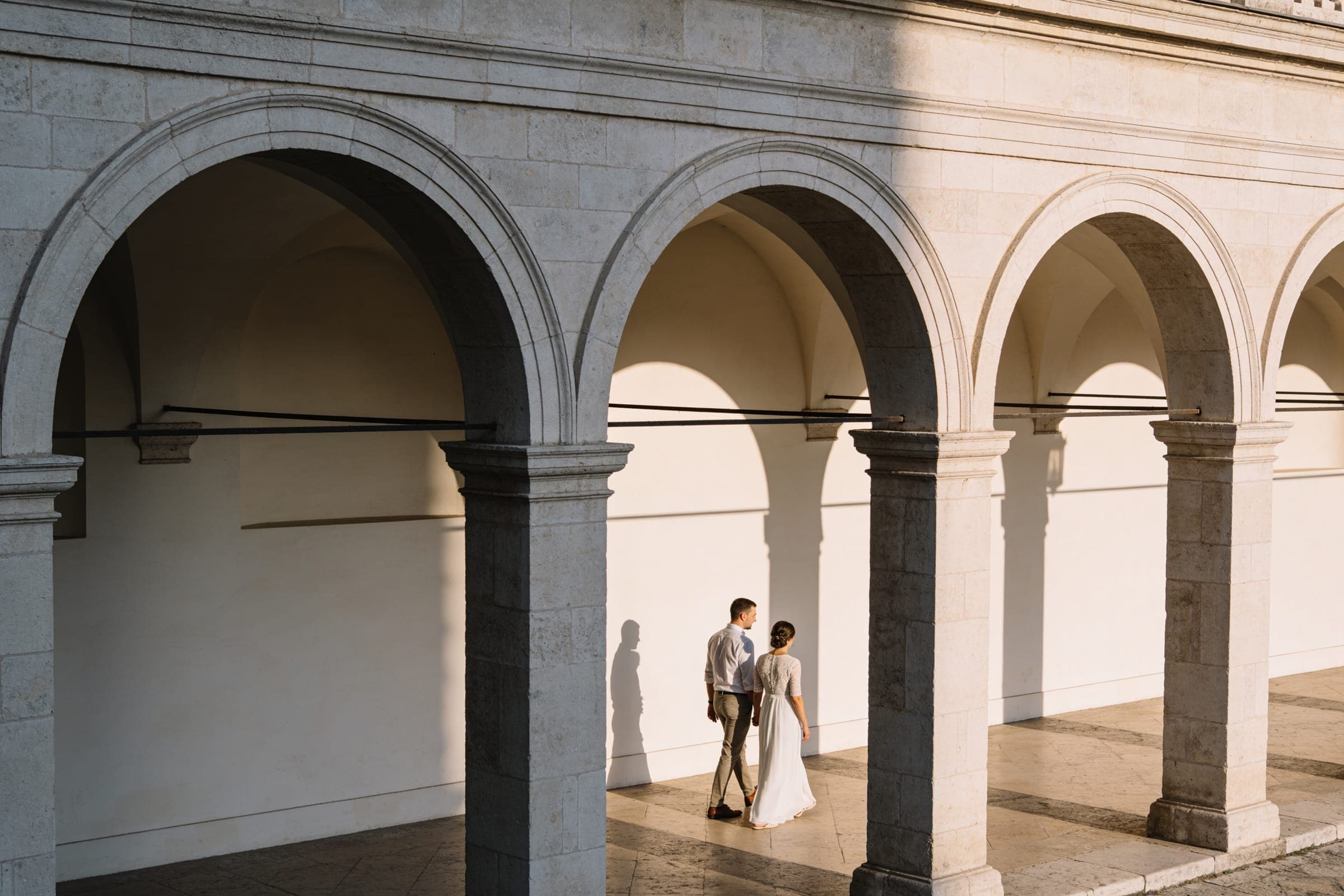
When a choice does not fit but you want it anyway, that is fine. Make it the one deliberate contrast, and keep everything else consistent so the contrast is clearly intended.
When the venue is not yet chosen
If you have not chosen a venue, use your saved images the other way round: look for the kind of place that appears most often in them. That tells you more about what you want than any single image. Then read what actually matters when choosing a wedding venue and the comparison of venue types before committing to a style.